Company merchandise ideas tend to multiply faster than the budget to execute them. Someone wants branded jackets for the staff. Someone else wants tote bags for the client event. A third person mentions that the trade show is coming up and they need something for the booth. Before long the merchandise conversation has expanded to cover six different audiences, four different occasions, and a budget that cannot realistically support all of them at the quality level any of them deserve.
The organizations that run effective merchandise programs do not try to do everything at once. They start with one audience, one purpose, and one item that serves both well, and they build from there.
At Sew NC, company merchandise ideas come through in every format and at every scale. The programs that generate real return are almost never the most ambitious ones at the planning stage. They are the most focused ones.
Starting With the Audience Before the Item
Every company merchandise ideas that actually gets used starts with a clear picture of who is receiving it and what that person’s daily life looks like. A branded item that fits naturally into how the recipient spends their time earns ongoing use. One that does not earn that place gets set aside within a week regardless of how much thought went into the logo placement.
Staff merchandise and customer merchandise operate on different logic. A team member who receives a quality branded hoodie from their employer evaluates it against what they would wear voluntarily, in their own time, in front of their own community. A customer who receives a branded tote bag evaluates it against whether the bag is useful enough to replace whatever they are already using for the same purpose. Neither of those evaluations is about the logo. Both of them determine whether the logo ever gets seen in public.
Event merchandise is different again. It needs to serve a purpose during the event itself, read well in the setting where it will be worn or carried, and have enough residual value that at least some recipients keep it afterward. An event t-shirt that people wear once during the activity and then use for household chores has generated one impression per unit. An event hoodie that participants wear for two winters has generated hundreds.
The planning step that most organizations skip is mapping those three audiences explicitly before selecting any item. Staff, customer, and event recipients need different things, and treating them as a single audience with a single merchandise solution produces items that serve none of them particularly well.
Company Merchandise Ideas for Staff Programs
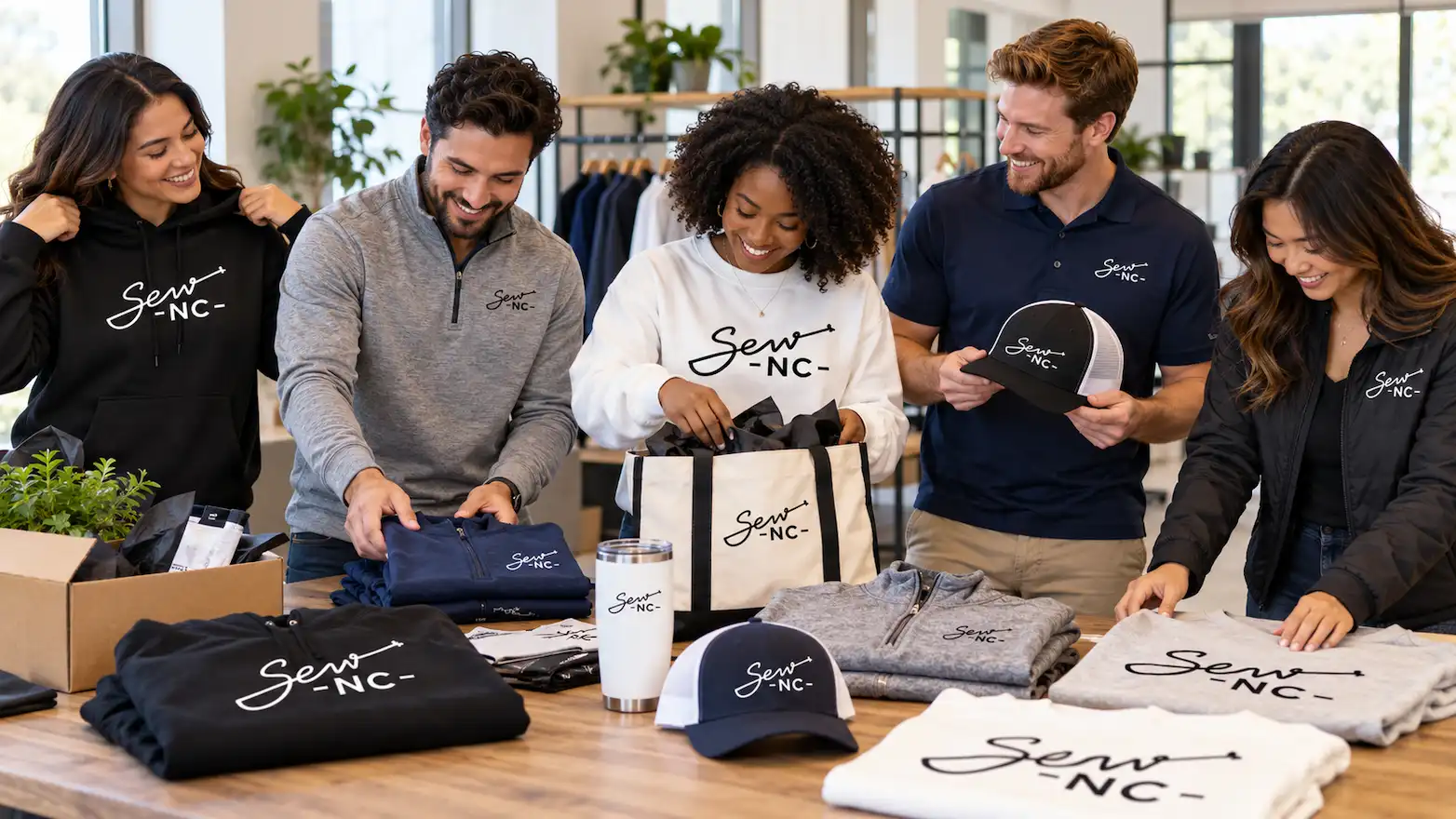
Staff merchandise works best when it adds something to the team member’s wardrobe or daily carry that they did not already have, at a quality level that communicates that the organization invested in them rather than just branded something and distributed it.
Branded apparel is the anchor of most successful staff merchandise programs. A quality midweight crewneck or pullover hoodie in the brand’s primary color with a clean left chest embroidery is something a team member reaches for on cold mornings because it is comfortable and fits well, not because the dress code requires it. That voluntary daily use is what generates the sustained community visibility that turns a staff apparel program into an ongoing marketing presence in the areas where the business operates.
For customer-facing staff and field teams, the branded apparel also functions as identification. A service technician, a field crew, or a retail employee in matching branded gear communicates organizational professionalism before any conversation takes place. The merchandise does operational work alongside its branding function.
Quality matters more in staff merchandise than in any other company merchandise category because the recipient’s evaluation standard is set by their daily experience of the organization. A staff member who has watched how the company invests in its operations, its workspace, and its people evaluates a branded hoodie against that context. A well-made piece communicates that the standard extends to how the team is outfitted. A thin, poorly finished garment communicates the opposite.
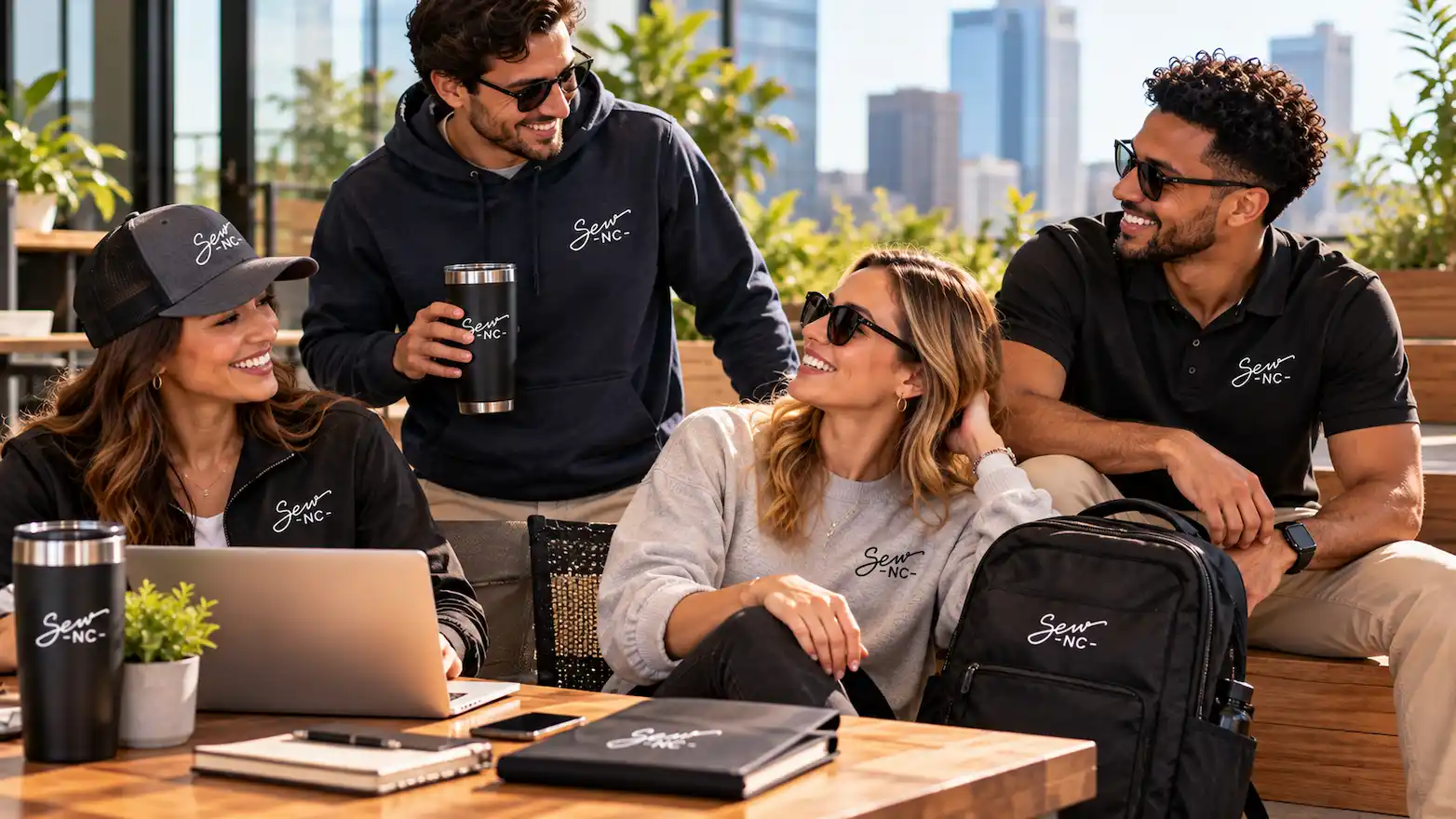
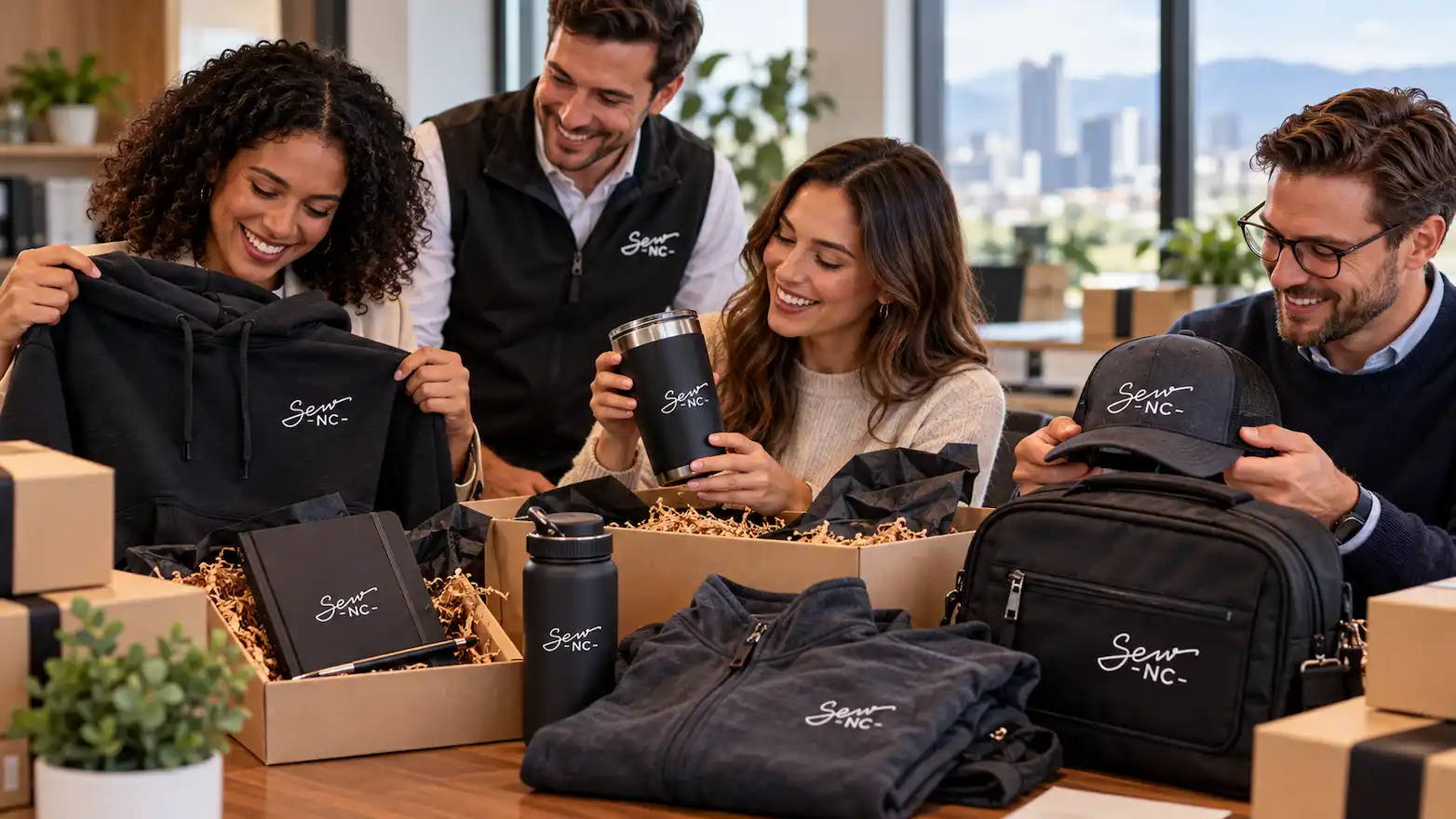
Custom tote bags and branded drinkware round out staff merchandise programs for organizations that want to extend the branded presence into the workplace and the commute. A quality insulated tumbler on a team member’s desk appears at every internal meeting and every client interaction in the shared workspace. A branded tote used for the daily commute generates community impressions on public transit, in coffee shops, and in the neighborhood surrounding the office.
Company Merchandise Ideas for Customer Gifting
Customer merchandise is evaluated against a simple question the recipient asks unconsciously: is this useful enough to keep, or is it going in the drawer with the other branded items nobody uses?
The answer is determined by the selection decision, not by the distribution moment. A useful item from a business the recipient has a positive relationship with gets kept. The same item from a business the recipient barely remembers does not. And a poor-quality item from a business the recipient genuinely likes does more damage to the relationship than no item at all.
The company merchandise ideas that consistently earn ongoing use in customer contexts are the ones that solve a real problem for the specific customer receiving them. A local contractor whose customers are homeowners benefits from leaving behind a branded item that the homeowner will encounter regularly at home. A quality custom tote bag in the kitchen, a logoed insulated bottle in the garage, a well-made hat in the hall closet: each of those items appears in the customer’s home environment regularly and generates quiet, repeated brand recognition without anyone having to seek it out.
For businesses in professional services, the customer gifting context is a relationship maintenance vehicle. A branded quarter-zip or a quality embroidered cap distributed as a year-end client gift communicates that the relationship matters beyond the transactions that define it. The item needs to be calibrated to the significance of the relationship rather than selected uniformly across every client regardless of tenure or value.
Company Merchandise Ideas for Events and Community
Event merchandise is where company merchandise ideas get the most visibility in the shortest window, and the items that generate return beyond that window are the ones worth the production investment.
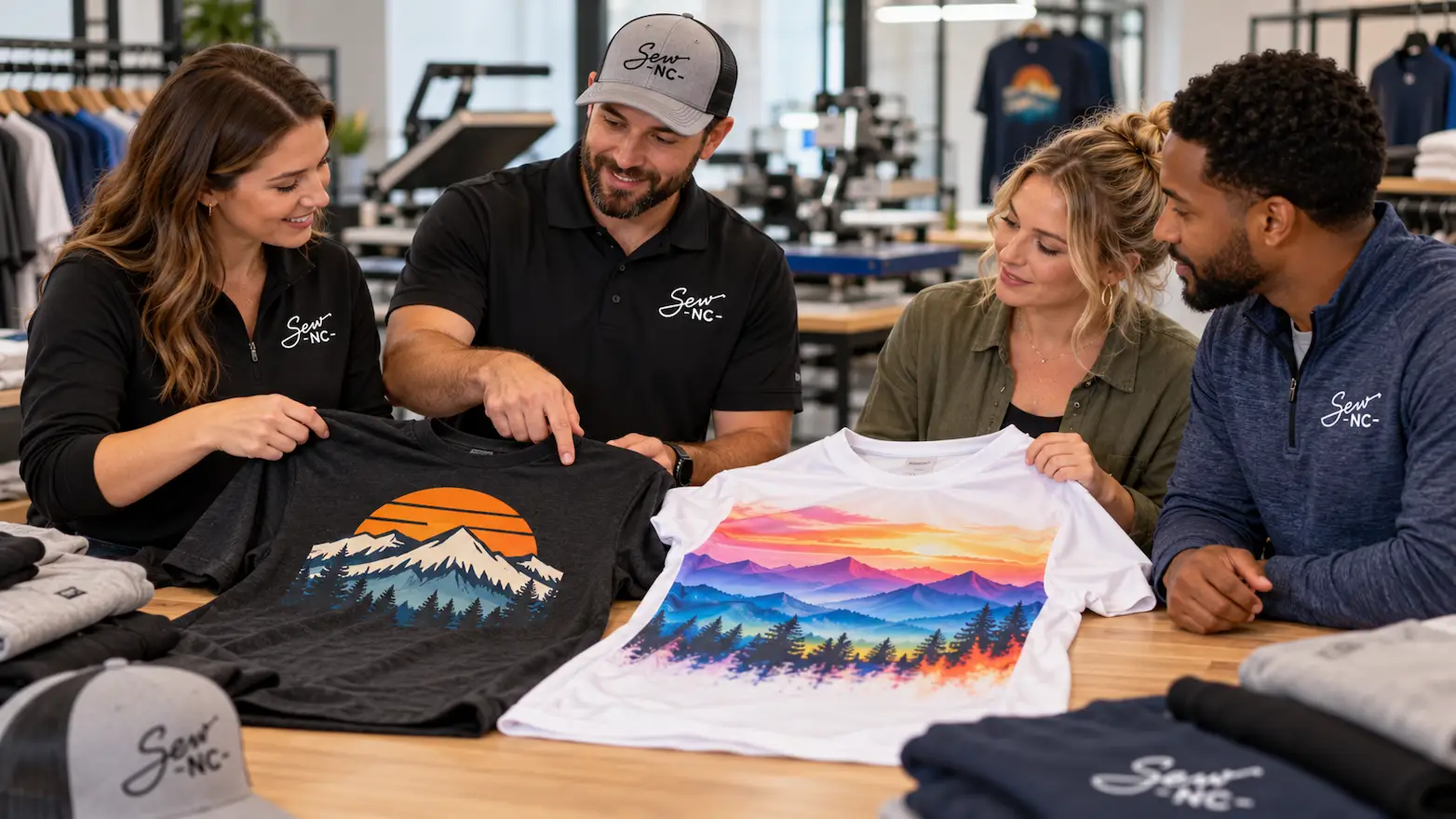
A well-designed event t-shirt or hoodie from a meaningful community occasion becomes part of how participants remember the experience. Every subsequent use of the garment reactivates that association in a small way and carries the brand into whatever setting the wearer enters. That layered impression over time is the return that makes quality event apparel worth the per-unit premium over a thinner, cheaper alternative.
For community events, volunteer days, and fundraisers, the branded merchandise also serves an identification function that matters during the event itself. Participants in matching branded gear look like a coordinated group rather than a random assembly of individuals, which communicates organizational capacity and commitment to everyone who observes the event from the outside.
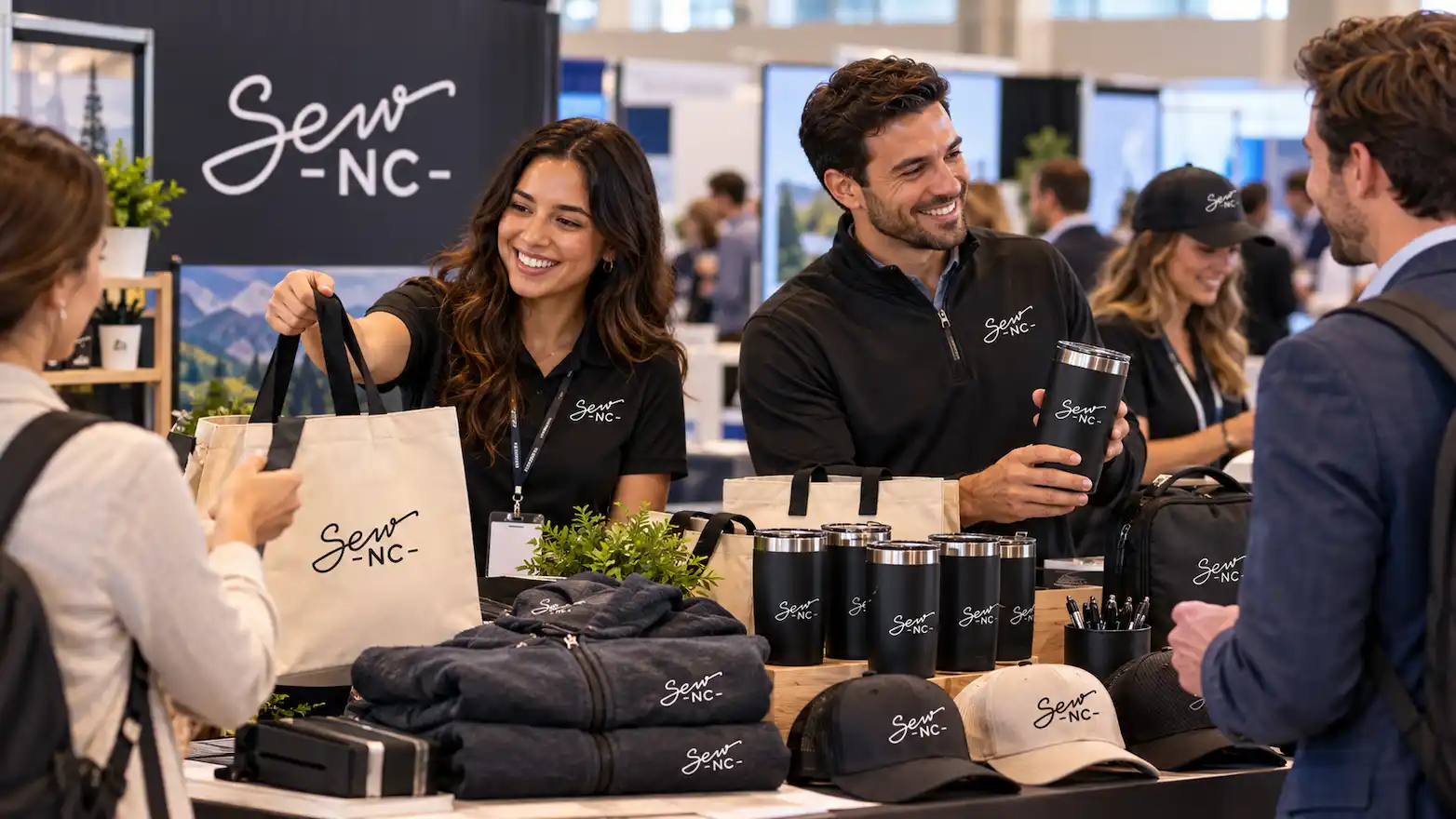
Custom tote bags at community events and trade show contexts generate impressions that extend well beyond the event date. A canvas tote distributed at a community health fair, a school fundraiser, or a farmers market becomes part of the recipient’s grocery and errand rotation if the bag is made well enough to be worth using. That rotation generates weekly community impressions for the business whose logo is on the exterior panel.
At Sew NC, we work with businesses, nonprofits, and organizations on company merchandise ideas that match the item to the audience and the purpose before anything goes into production. Our promotional products services cover apparel, headwear, bags, drinkware, and branded merchandise for staff programs, customer gifting, event merchandise, and community outreach across the region.
Selecting the Right Merchandise Format
Not every company merchandise idea requires a full garment or a premium product to be effective. The right format depends on the audience, the occasion, and how the item will actually be used once it leaves the distribution point.
Headwear is consistently underestimated as a standalone merchandise format. A quality embroidered cap or a well-made beanie generates impressions at eye level in community settings that most other merchandise categories cannot match per impression on a unit cost basis. For local businesses whose audience lives and works in the same geographic area the brand serves, a quality branded hat distributed to the right recipients generates more concentrated community visibility than almost any other single item.
Branded drinkware earns its place in company merchandise programs because it fits into routines the recipient already has without asking them to change anything about how they move through their day. A quality insulated tumbler fits into the morning coffee routine. A branded water bottle fits into the gym bag or the desk setup. The brand appears daily in professional and personal settings as a byproduct of a habit the recipient already had before the item arrived.
Custom tote bags occupy a specific and consistently useful role in merchandise programs for businesses whose customers or communities value practicality and sustainability. A well-made canvas tote with a clean logo is something recipients use for years for grocery runs, farmers markets, and everyday errands. In markets where environmental awareness is part of the community’s identity, a branded canvas tote communicates something about the business’s values that a plastic bag alternative does not.
Quantity Planning Before the Order
The quantity decision for any company merchandise program should be based on a realistic distribution plan rather than an aspirational one, and the difference between those two anchors determines whether the program generates return or produces surplus inventory that becomes a storage problem.
For staff programs, the practical starting point is current headcount plus a 10 to 15 percent buffer for new hires and replacements. Ordering significantly above that without a confirmed plan for distributing the additional units produces inventory that may not be relevant by the time the program next cycles through a distribution moment.
For customer and event merchandise, the distribution plan should drive the quantity rather than the per-unit pricing at a specific volume tier. It is more effective to order 50 high-quality items and distribute them intentionally to the right recipients than to order 200 lower-quality items and distribute them without a clear audience or purpose. The 50 well-selected items generate more sustained impressions over time than the 200 distributed without a framework.
The pricing structure across quantity tiers is worth understanding before the decision is made, because per-unit cost changes at different volume thresholds and that knowledge sometimes makes a slightly larger order economically sensible when the additional units have a confirmed use. The mistake is letting price per unit drive quantity beyond what the distribution plan can absorb.
Decoration Quality and What It Communicates
The decoration on any company merchandise ideas item is part of the impression the brand creates through the item, and it operates independently of the base product’s quality. A clean, correctly applied embroidered logo on a mid-tier garment looks more intentional than a smeared print on a premium one.
Embroidery is the right decoration method for staff merchandise and customer gifts where the brand needs to communicate quality and permanence. Thread on fabric holds up through years of regular use, adds a dimensional quality that print methods cannot replicate, and signals that the branded item was meant to last. For jackets, structured headwear, polos, and quality hoodies distributed as part of a staff or client merchandise program, embroidery is the method that matches the investment the item represents.
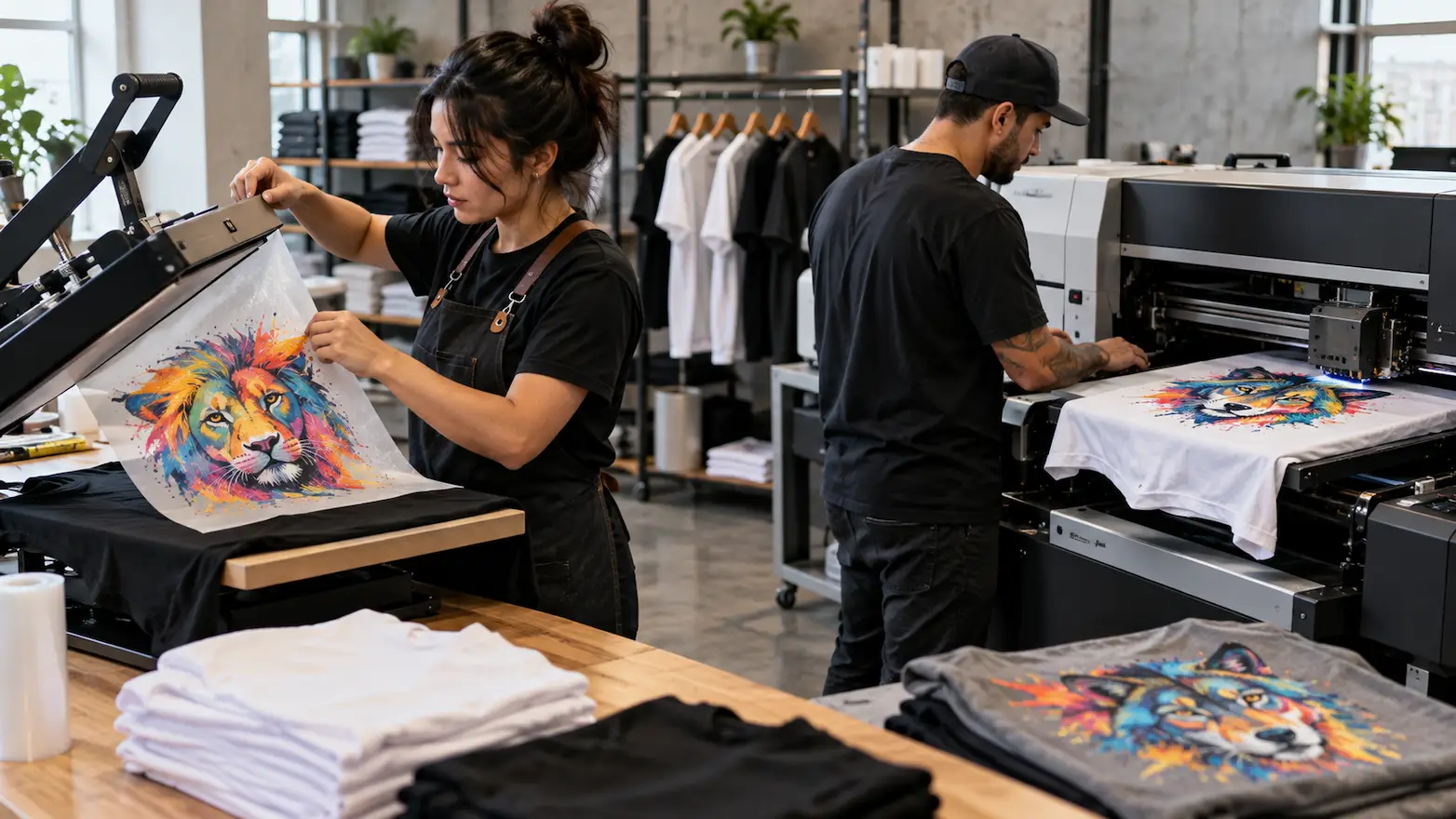
Screen printing belongs on high-volume event merchandise and programs where the quantity justifies setup and the artwork involves coverage that embroidery handles less efficiently. A well-executed screen print on a quality jersey is a genuinely good-looking result that ages well with proper garment care.
DTF covers the programs that fall between those two methods: smaller runs with complex or full-color artwork, personalized items where the design changes across units, and orders where design variations across departments or recipient groups need to run without the per-variant setup overhead that makes screen printing less practical at lower quantities.
Reach out through the Sew NC contact page to start with merchandise that fits your audience and budget. The planning conversation is where the program’s return is largely determined, and it is worth having before the budget is committed to items that have not been evaluated against the specific people who will be receiving them.