Corporate promotional items are not a single category with a single strategy. The item that belongs at a trade show booth is not the same item that belongs in a year-end employee recognition package. And the logic that makes a recruiting event gift effective is completely different from the logic behind a client retention campaign.
Treating all four contexts the same produces merchandise that fits none of them.
The comparison that actually matters before any corporate promotional items order is placed is not between products in a catalog. It is between program contexts: what the event is, who the recipient is, what the item needs to accomplish during the event, and what it needs to do in the weeks and months that follow.
At Sew NC, corporate promotional items come through for every context covered in this guide. The programs that generate real return do not share a garment or a product. They share a decision-making process that starts with the event context before it ever touches a product listing.
Trade Shows: When Everything on the Table Competes With You
Every exhibitor at a trade show is distributing something. That is the reality the booth is operating in, and the first job of a corporate promotional item in that environment is to survive the bag audit, the unconscious edit that happens when an attendee gets home and decides what stays and what goes into the recycling bin.
Items that survive that cut share two characteristics. They are useful enough to keep. They are well-made enough that keeping them does not feel like settling.
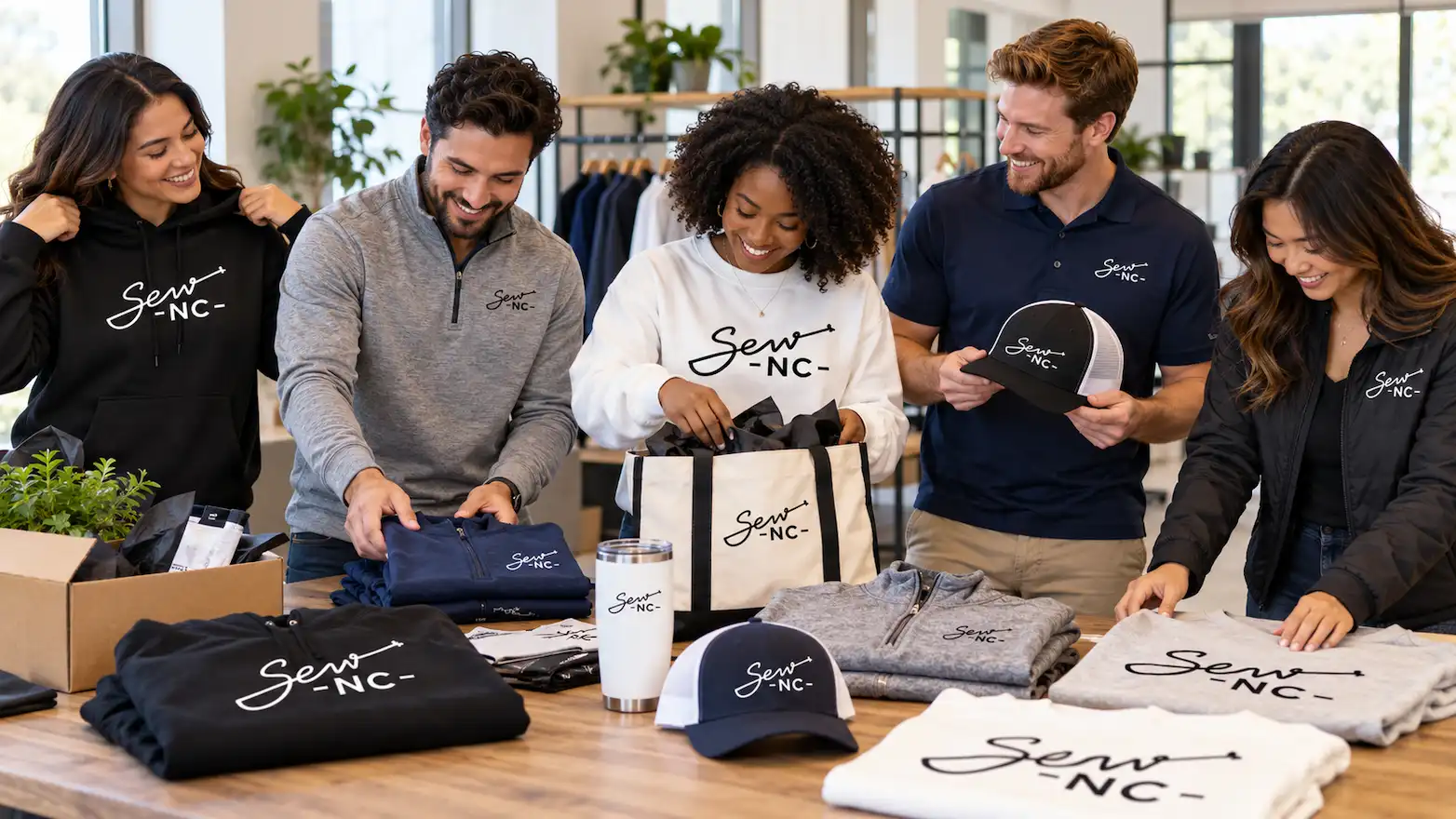
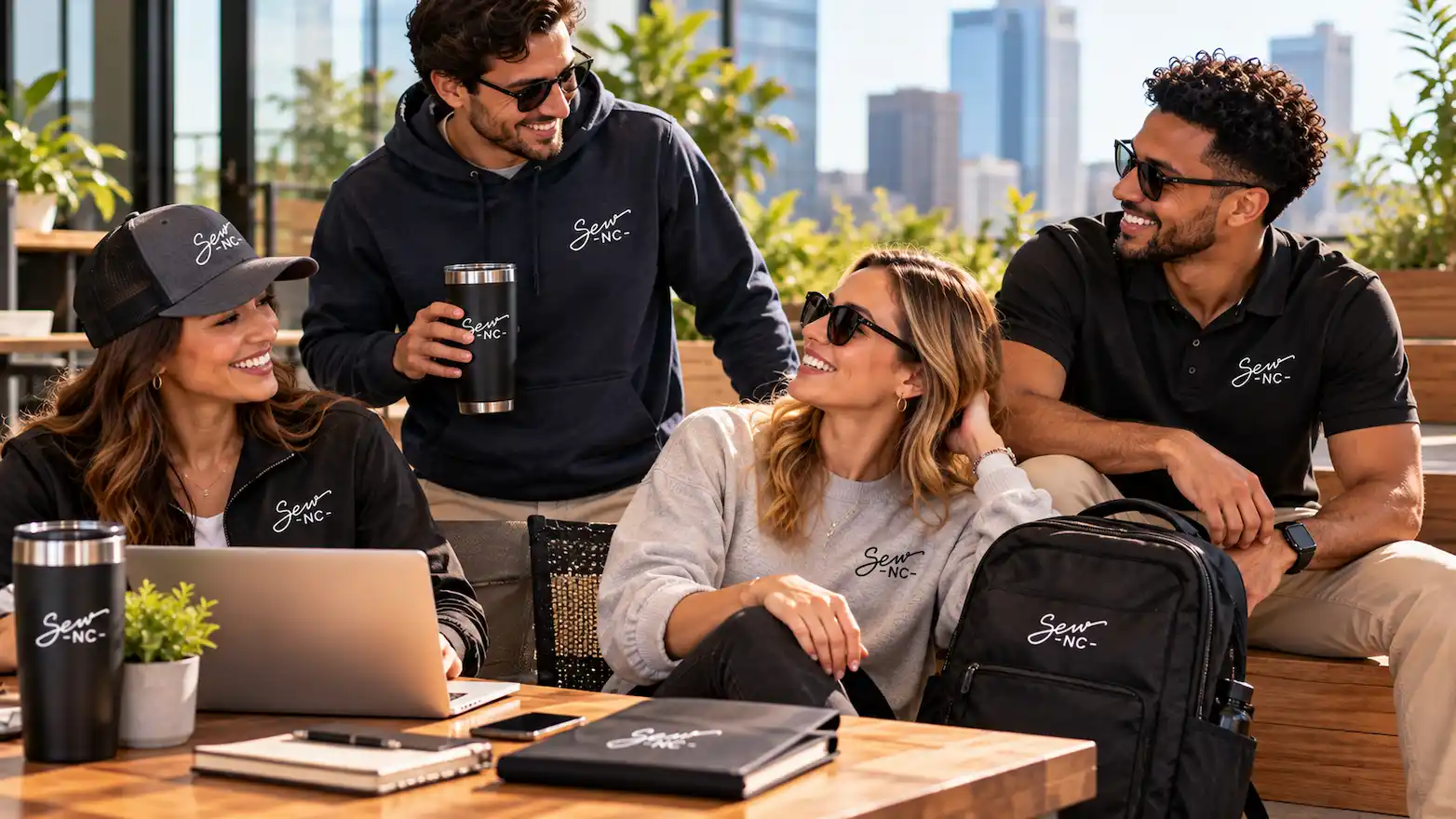
A quality branded tote is in use before the show ends, carrying everything the attendee collected across the floor. A good insulated tumbler is going to the coffee station with them on day two. Both items establish a presence with the recipient before the relationship has been consciously evaluated. That is what the best corporate promotional products do in high-competition environments: they earn their place before anyone has to decide to give them one.
Apparel works differently at trade shows than it does in other event contexts. Distributing branded t-shirts to every booth visitor is a volume play that rarely produces the return its cost suggests. A quality embroidered cap or a well-made shirt given intentionally to a qualified lead communicates something entirely different from the same item stacked in a bin for anyone walking past to grab. One is a relationship signal. The other is a giveaway.
Decoration quality matters here as a competitive differentiator. A clean embroidered logo on a structured cap stands out among the generic printed merchandise that fills most trade show bags. The item communicates the organization’s attention to detail before any product conversation happens.
Employee Appreciation: The Internal Quality Standard
The recipient knows the organization. That single fact changes everything about what corporate promotional items need to do in an employee appreciation context.
An external audience evaluates a branded item against what other companies gave them. An employee evaluates it against what this company has given before, against how the organization invests in its people, against the standards they have watched the business hold in everything else it does. The quality floor for appreciation merchandise is set from the inside, and it is almost always higher than buyers account for when they plan the program.
Premium apparel anchors the strongest employee appreciation programs because a quality branded jacket, hoodie, or quarter-zip communicates investment in a way that a logoed keychain or a branded notebook does not. It is also something the team member wears outside of work, which extends the organizational recognition into their personal life. A staff member who reaches for the company hoodie on a Saturday morning because it is comfortable and they like how it looks is carrying the organization’s appreciation into the community without being asked.
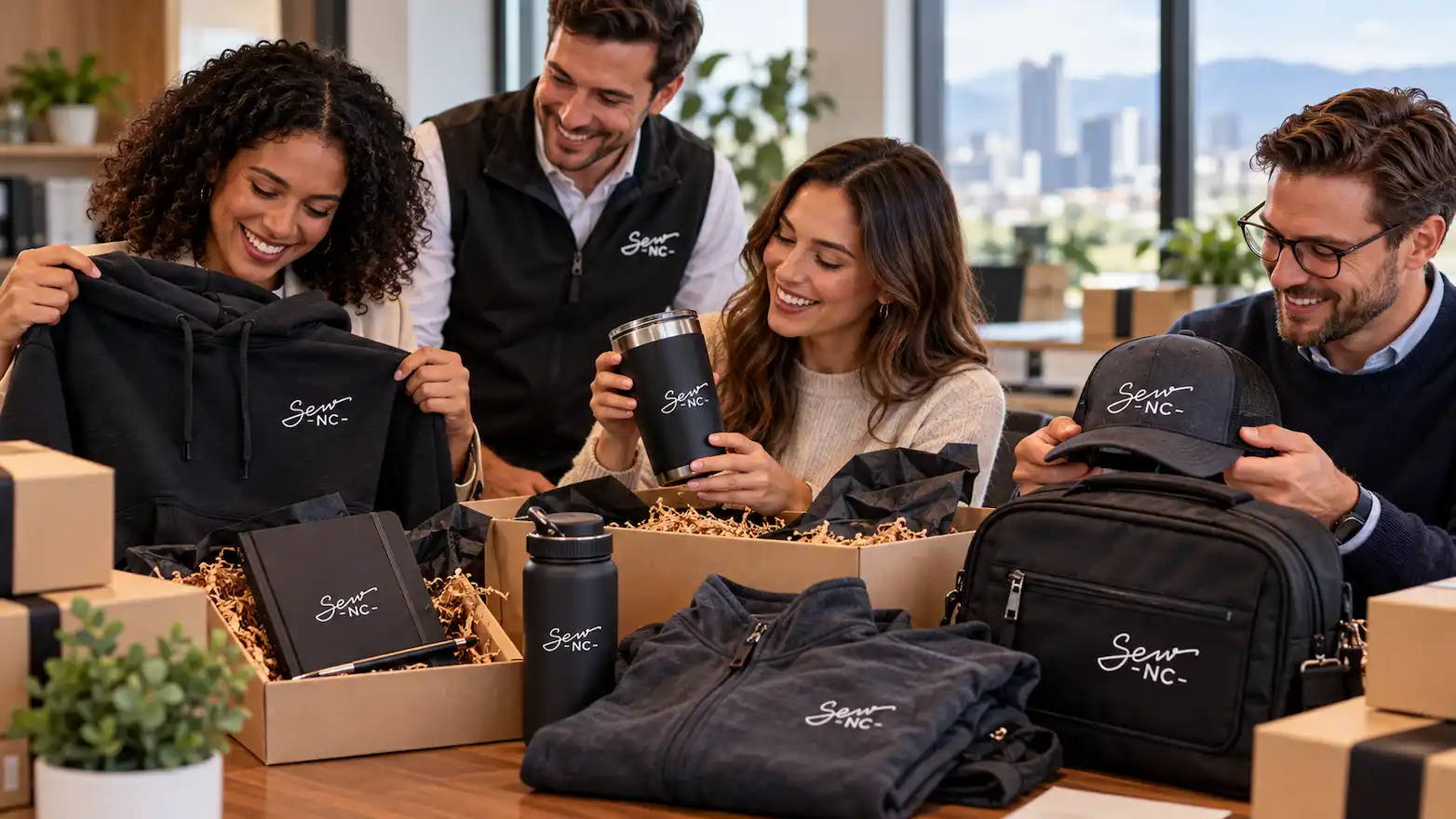
Combining an apparel piece with a quality drinkware item covers the two most consistent use environments in one package. The drinkware appears on the desk in client-facing settings, in meeting rooms, in shared kitchen spaces. The apparel appears in community settings outside of the office. Together they generate impression volume across two different audiences, and they do it every day long after the appreciation event that prompted the order.
Recruiting Events: First Impressions in a Competitive Room
Recruiting events are unusual in one specific way. The candidate standing at a booth is simultaneously evaluating the organization and being evaluated by it. That mutual evaluation context makes the quality of corporate promotional products at a career fair a direct communication about how the organization sees itself, how it invests in presentation, and, by extension, how it might invest in the person standing across the table.
A low-quality item at a recruiting event does not just fail to impress. It actively communicates something the organization did not intend to say. A quality branded item does the opposite: it signals that the organization’s standards extend to how it shows up at a career fair, not just in the product or service it sells.
Items travel. A candidate who takes a well-made branded tote or a quality cap to campus carries the employer brand into the conversations that happen after the fair, in exactly the environments where employment decisions are being made among peers, classmates, and colleagues. That post-event visibility is what the item needs to sustain, and it only sustains if the item is worth keeping.
Personalization adds a layer of specificity that generic giveaways cannot reach. A design element that references the candidate’s field or target role, executed through DTF at small quantities, communicates that the recruiting effort was targeted rather than blanketed across the room.
Client Campaigns: Maintaining a Relationship Without a Meeting
Client-facing corporate promotional products serve a function that event merchandise and internal recognition programs do not. The item is not marking a moment. It is maintaining a relationship across the time between interactions, keeping the brand present in the client’s professional environment on a low-friction ongoing basis.
Quality drinkware earns the highest sustained daily use rate in this context because it fits into routines the client already has. A branded insulated tumbler on a client’s desk is at every internal meeting and every call for years after the initial distribution. The visibility accumulates without any additional cost or effort after the gift arrives. For a business whose value to the client compounds over time, that ongoing presence in the client’s workspace is the specific exposure the relationship is designed to generate.
Apparel as a client gift adds a dimension drinkware cannot cover: community visibility. A client who wears a quality branded quarter-zip in their personal life carries the brand into their neighborhood, their social network, and the community settings where word-of-mouth about a business actually travels. For local and regional businesses, that community-level impression is more valuable per occurrence than a paid digital impression in the same market.
The calibration of client-facing corporate promotional items to the significance of the relationship is the variable most programs get wrong. Distributing the same item to a client of ten years and a client of ten weeks communicates that the organization did not distinguish between them. Tiering the program by relationship depth, with premium items for long-tenure clients and well-chosen but less elaborate gifts for newer relationships, produces a program that the client actually experiences as personal.
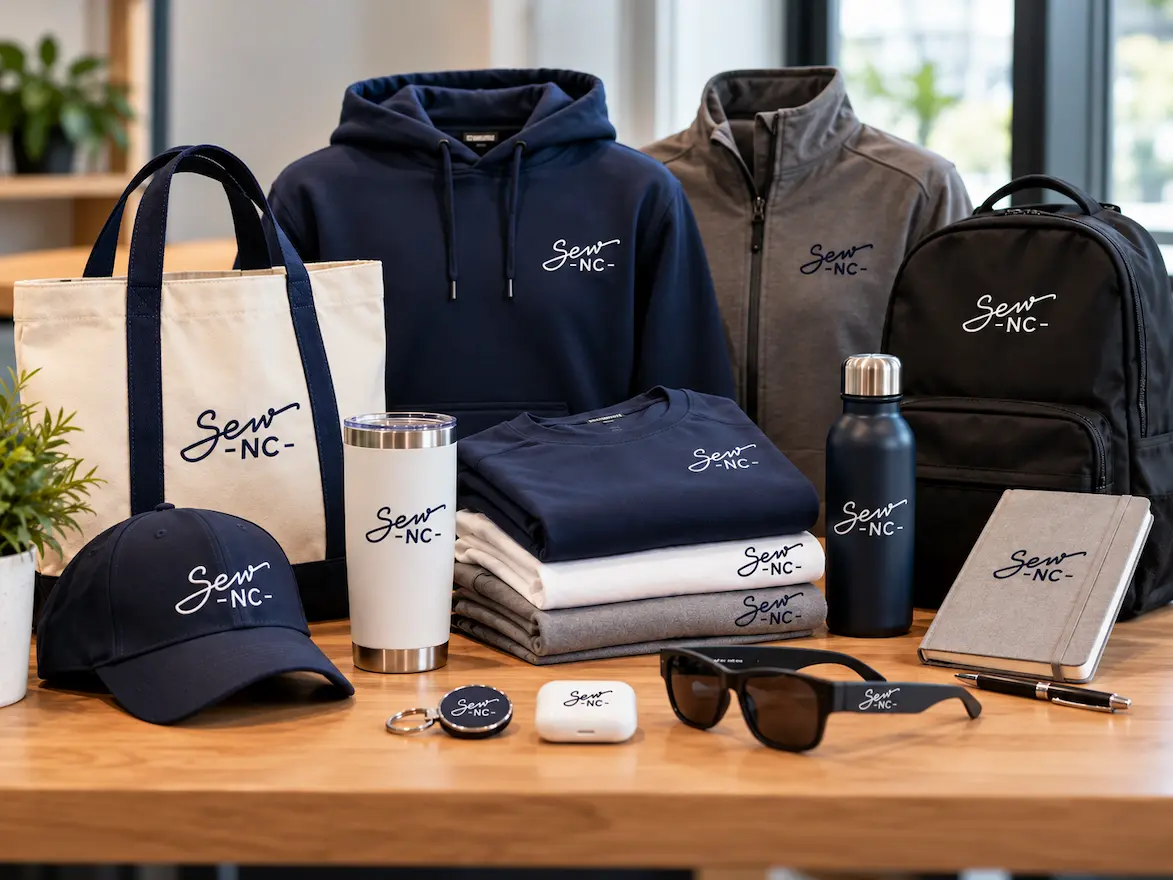
At Sew NC, we help organizations work through which corporate promotional items fit each event context and recipient relationship before anything goes into production. Our promotional products services cover apparel, headwear, drinkware, bags, and branded merchandise for trade shows, employee appreciation programs, recruiting initiatives, and client relationship campaigns across the region.
Matching Decoration to Context
Decoration method is not a finishing detail in a corporate promotional items program. It is a quality signal that operates independently of the item it is applied to, and choosing the wrong method for the context undermines the item regardless of its underlying quality.
Embroidery belongs on items positioned as premium gifts or milestone recognition pieces. Thread on fabric communicates permanence, holds up through years of use without degradation, and adds a dimensional quality that print methods cannot replicate. For client relationship gifts, employee appreciation pieces, and recruiting items where the organization wants to communicate that it invested in the item, embroidery is the method that carries that message.
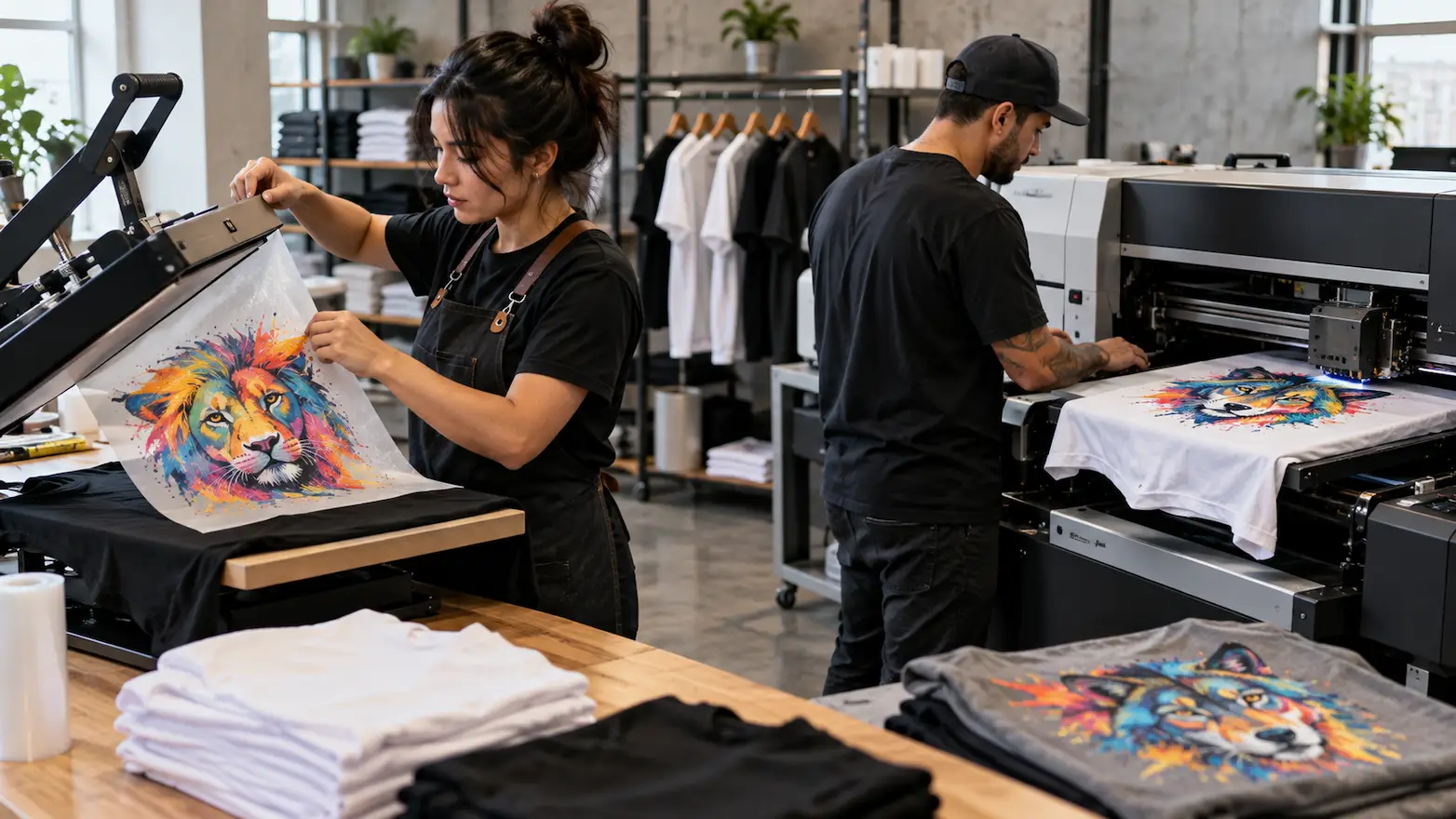
Screen printing covers high-volume event contexts where the quantity justifies setup and the design involves coverage that embroidery handles poorly at scale. Trade show totes with a large front graphic, event t-shirts for a team-wide distribution, and recruiting giveaways where the per-unit budget is constrained by volume are screen printing’s home territory.
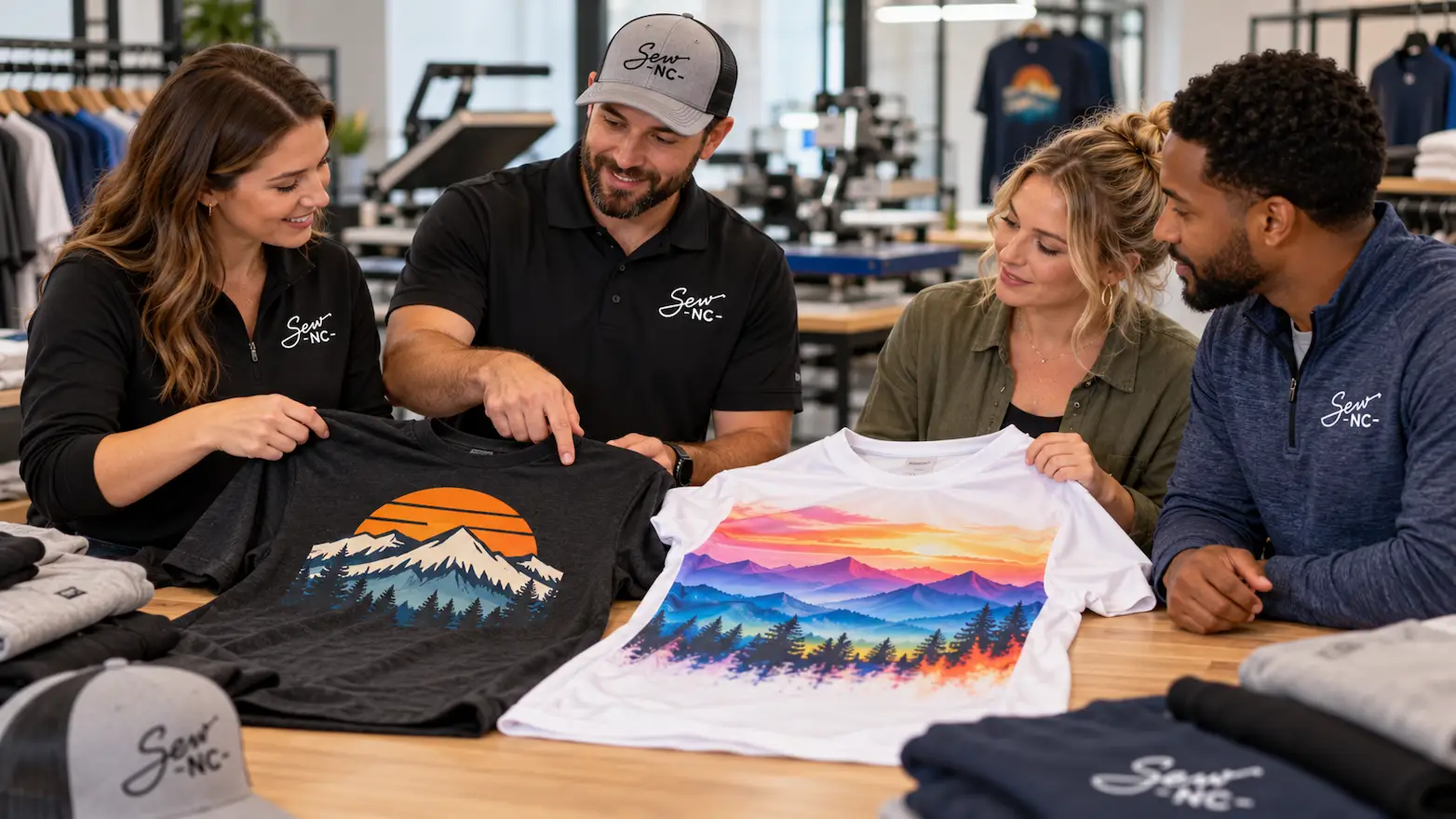
DTF handles the segmented programs where design variations across recipient groups or relationship tiers need to run without the per-variant overhead that makes screen printing less practical for small-batch differentiated runs. A recruiting campaign with department-specific elements, a client appreciation initiative with tier-specific design variations, a multi-division employee program where each group carries a distinguishing detail: these are DTF applications where the flexibility produces a result neither embroidery nor screen printing can match at comparable cost.
Production Planning That Accounts for How Seasons Actually Work
Corporate promotional items orders miss their event dates more consistently than almost any other branded merchandise category, and the reason is almost always the same: the production timeline was treated as something to manage after the selection decisions were made rather than as a constraint that shapes every decision from the beginning.
Standard decorated apparel and merchandise production runs two to three weeks from artwork approval under normal conditions. Programs that include multiple item types across different decoration methods require coordinating those individual timelines so the full program arrives before the event rather than in pieces after it. A tote bag at the booth and a jacket arriving the following week is not a corporate promotional items program. It is a logistical problem wearing a marketing strategy.
Fall event seasons compress production capacity across every context simultaneously. Trade shows, year-end client gifts, recruiting campaigns, and employee appreciation programs all concentrate in the October through December window, and the organizations that initiate those orders in August or early September are working with more options, more available inventory in popular styles, and more timeline buffer than the organizations that start in October. Earlier is almost never wrong. Later almost always costs something.
Reach out through the Sew NC contact page to create a promotional plan for your next corporate event. Getting the right corporate promotional items into the right hands before the event date requires decisions that are considerably easier to make before the planning window closes than after it already has.