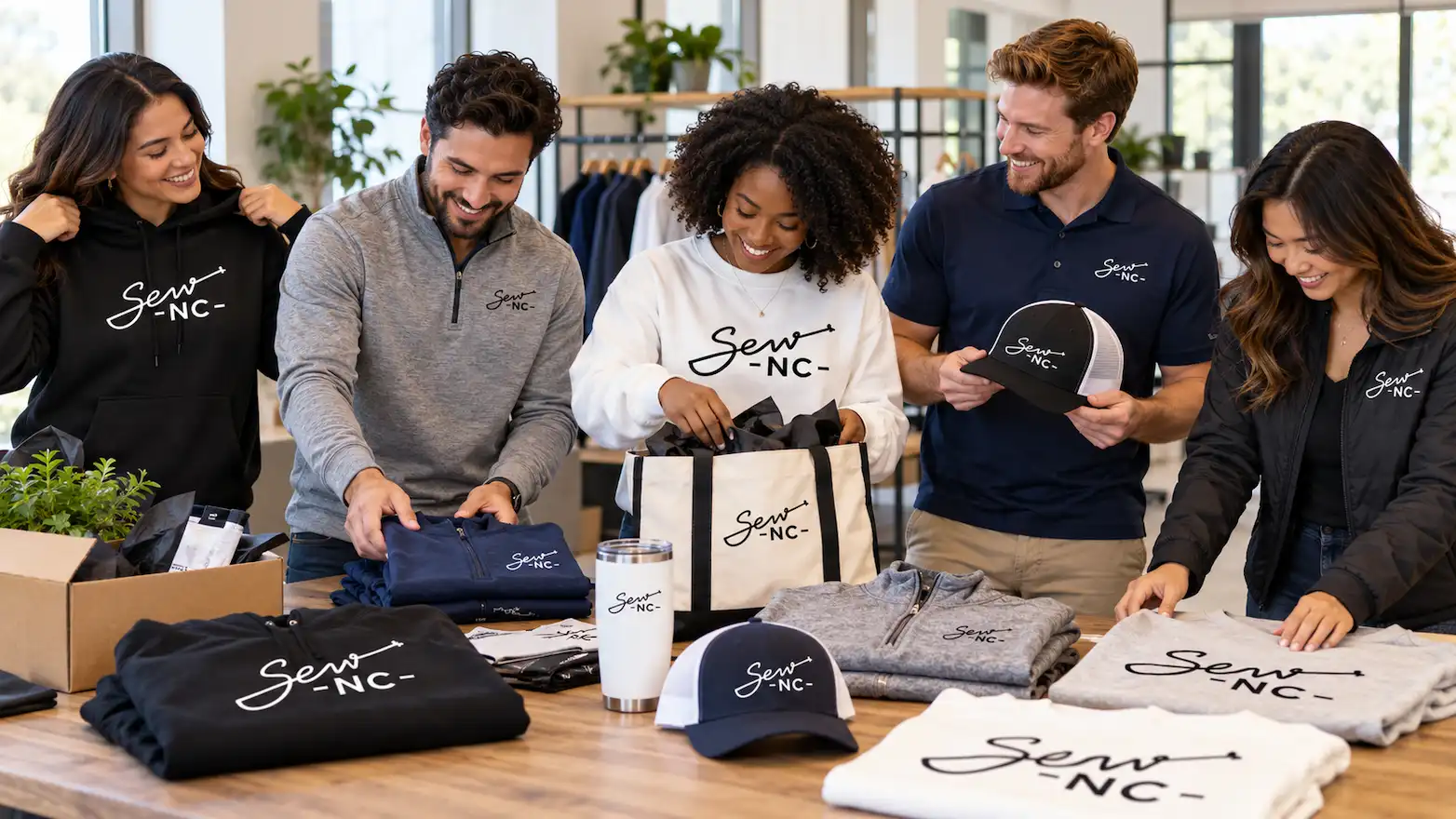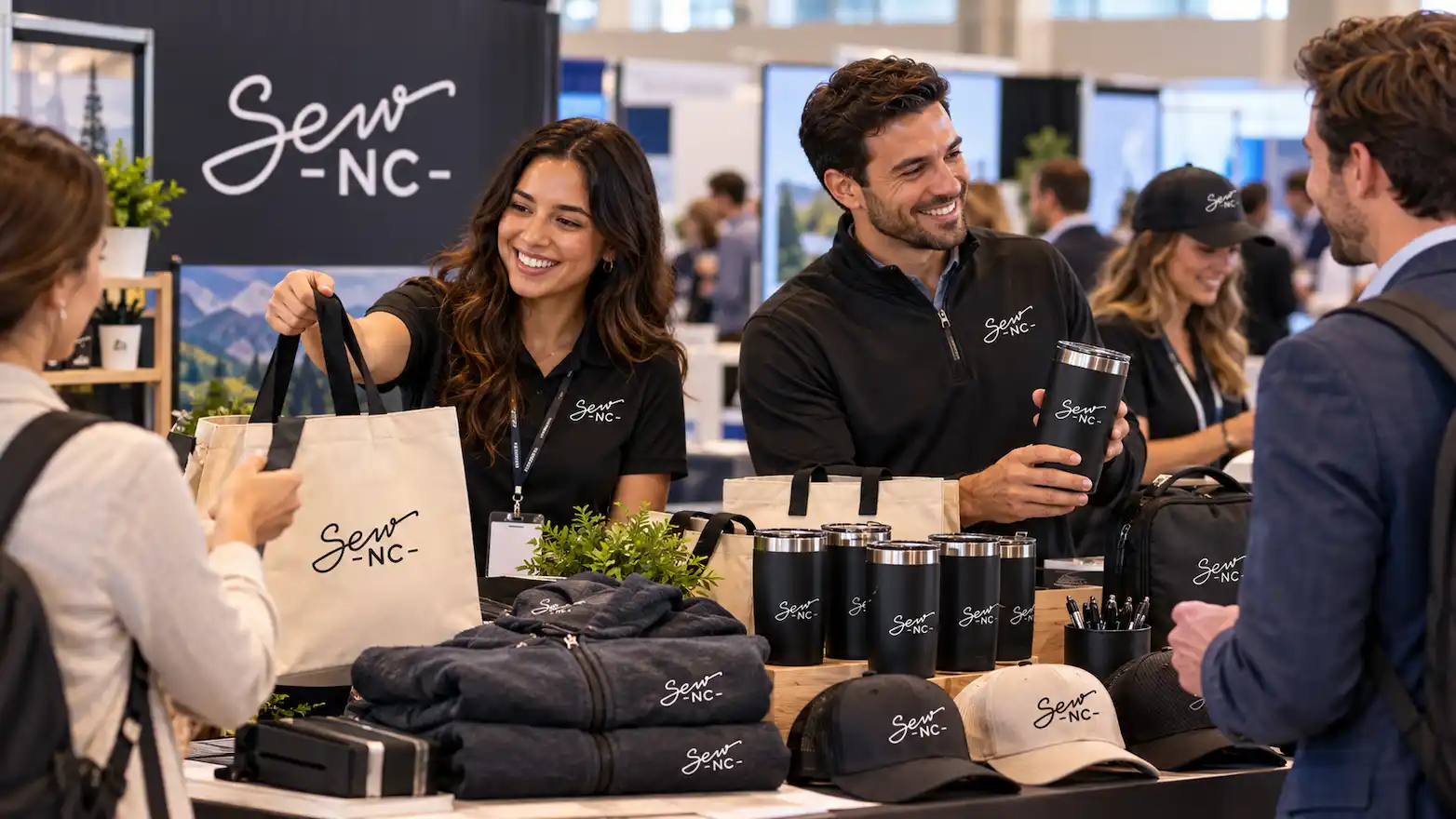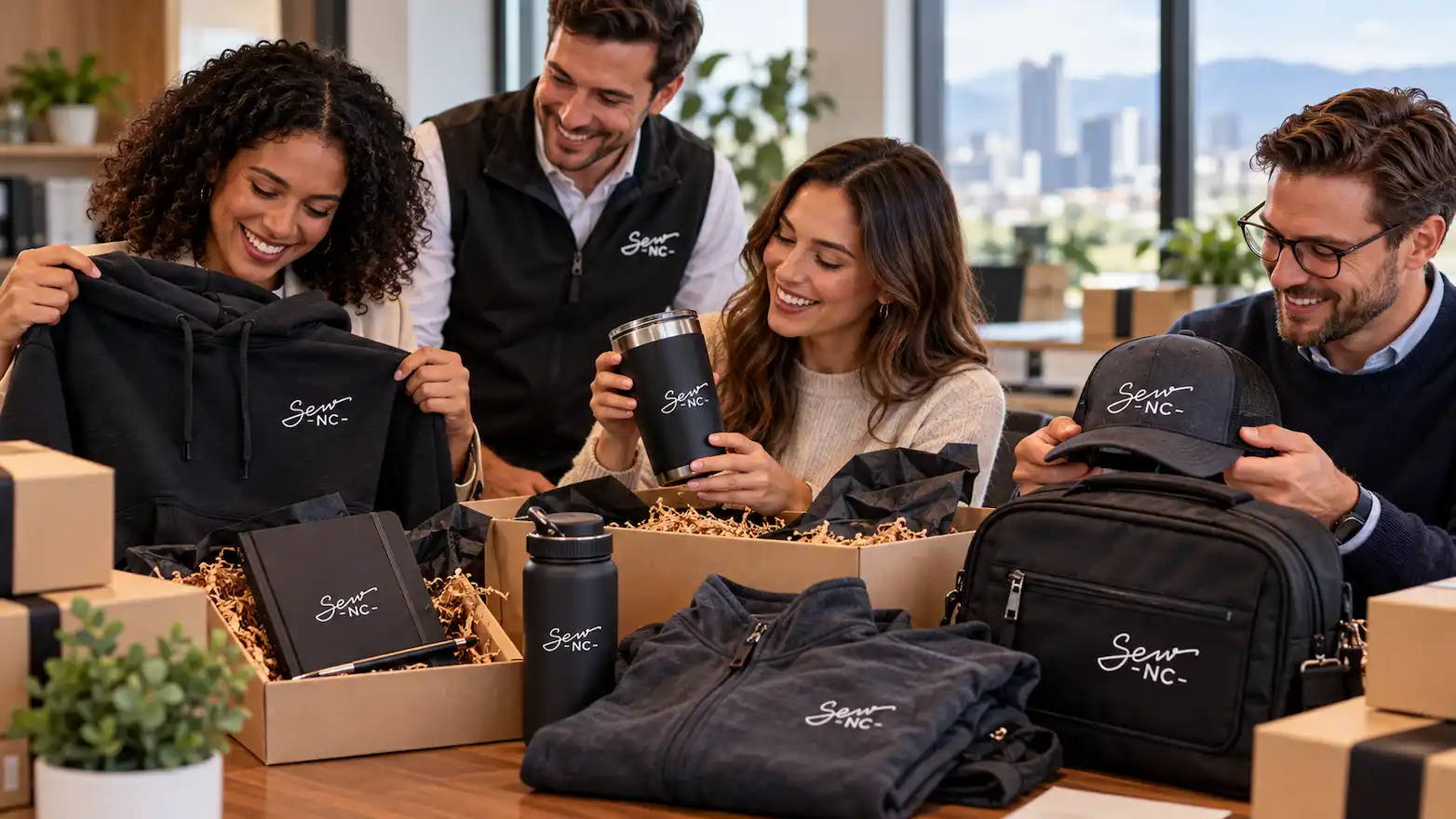
Most corporate swag ideas get discussed in a planning meeting and then defaulted to the same five catalog items every other organization already distributed last quarter. Logoed pens. Branded notepads. A tote bag selected because it hit the right number on the per-unit column.
Then someone wonders why the swag table looked exactly like every other swag table in the room.
The organizations that build programs people actually remember make different decisions at the selection stage. Not bigger budgets. Different questions. At Sew NC, corporate swag ideas come through in every format imaginable, and the ones that generate real return share a consistent logic: the item was chosen because it fits how the recipient lives and works, not because it cleared a price threshold.
What Makes Corporate Swag Worth Ordering
Swag that works earns a permanent place in someone’s daily routine. That is the only metric that matters across the full lifespan of the program.
An item used three times a week for eighteen months generates a fundamentally different return than an item that gets looked at once and set aside. The gap between those two outcomes is almost entirely determined before the order is placed, during the selection process itself, not during distribution.
Most corporate swag ideas do not work not because the company put money into them. Because the choice started from the wrong place. The cost per item was the topic. The everyday situation of the person getting it was not. Branded items that people keep using have features: they fix a real problem they are built well enough that using them feels good and the logo is placed in a way that the item makes the brand look good wherever it goes. Custom clothes, drinkware and useful bags do better, than other types of corporate swag when looking at how many people see them according to industry studies. Not because they are the original choices. Because they are the used ones.
Apparel: The Corporate Swag Idea That Compounds Over Time
A well-made branded hoodie worn twice a week generates more brand impressions in a single month than most other corporate swag ideas generate across their entire lifespan. That is the math on daily-use apparel in a community setting, and it explains why apparel anchors every program that actually delivers ongoing return.
People put on clothes every day when they go out. The brand goes with the person into places that no money spent on ads can really get to: supermarkets, school drop-off zones, local gatherings, lazy weekend mornings. For local companies the number of times people see the brand in the areas where the company really operates is more useful each time, than a digital ad shown to someone who doesn’t live in that area.
The custom apparel items that anchor the strongest corporate swag ideas share one characteristic: the recipient would reach for them even without the logo. A quality crewneck in a color someone actually wants to wear. A well-made hoodie that fits correctly across different body types. A structured performance layer that functions as well as it looks. The brand visibility follows automatically from a wearable choice the person makes independently every morning.
Format matters too. T-shirts serve high-volume event contexts well. Hoodies and crewnecks carry more weight as recognition or gifting pieces. Quarter-zips and premium jackets belong in milestone programs where the garment is expected to last for years, not just one season.
Decoration is part of the signal. Embroidery on a quality piece communicates that the details mattered to whoever put the program together. A poorly applied print on a thin fabric says something else, and it says it every time the garment is in public.
Headwear That Never Stops Working
Hats sit at eye level. That single fact explains most of what makes headwear one of the most efficient corporate swag ideas available on a per-impression basis.
A branded cap worn on a commute, during a weekend errand run, at a neighborhood walk, or at a local event puts the logo directly in the sightline of everyone nearby. No follow-up required. No media budget to sustain it. A structured embroidered cap is the most durable and professionally finished headwear option in this category: the buckram front panel gives the embroidery a stable surface, the logo registers consistently across every unit in the run, and the finished hat communicates the kind of intentionality that a printed foam-front alternative does not.
For organizations in markets with real winters, beanies extend the headwear program’s effectiveness into the months when warm-weather items sit in a closet. A quality embroidered beanie worn from November through March generates sustained community impressions across a period that most paid local advertising campaigns would struggle to sustain at the same cost per impression. The functional value drives the use. The brand impression follows.
Trucker hats and dad hats work well for brands whose personality runs casual and approachable. When the tonal match between the format and the brand is right, the corporate swag idea feels native to the context rather than grafted onto it, and that distinction is part of what determines whether someone is still wearing the item six months after they received it.
Drinkware: Presence Without Asking for It
The most sustainable corporate swag ideas fit into routines the recipient already has. Drinkware is the clearest example of that principle working in practice.
A branded insulated tumbler on a team member’s desk is present at every internal meeting, every video call, every break room conversation, and every morning someone walks past that workspace before the day starts. The brand appears in professional settings alongside colleagues and clients without any action from the organization after the item was distributed.
Daily workplace visibility is the impression that a corporate swag program aimed at internal or client audiences is meant to create. Quality decides how long the item stays in that rotation. A insulated cup that does not perform well is replaced quickly. A well‑made item becomes part of a routine that the recipient does not think about replacing and the brand impression grows over two or three years of desk presence without any extra money spent.
Visibility in the office becomes a lasting reminder, a cue that keeps the brand in mind without cost or effort.
Bags That Carry the Brand Into the Right Spaces
Branded bags work because they go places. A canvas tote used for grocery runs in the neighborhood around a business creates impressions among exactly the people most likely to become customers. A branded laptop bag taken to a client meeting shows standards without anyone saying a word about it. A drawstring bag on a youth sports team creates visibility at every practice and every game, throughout a season.
The selection decision that determines whether a bag earns that kind of sustained use is matching the format to how the recipient actually moves through their day. A laptop bag for someone who never carries a laptop is not a useful corporate swag idea. A canvas tote for someone who shops exclusively online earns no impressions in public. Useful bags get used. Non-useful ones become a category of branded merchandise that recipients keep for a while out of vague obligation before eventually donating.
Logo placement on the exterior panel generates impressions every time the bag appears in a setting with other people around it. For local businesses whose audience lives and works in the same geographic area the brand serves, that concentrated community visibility is more relevant per impression than broader distribution in markets the business does not actually serve.
Building a Corporate Swag Package That Covers More Ground
The strongest corporate swag ideas are rarely single items. They are packages, or at least they land like packages in the recipient’s experience, where the combination of pieces covers different settings and different moments in the same person’s daily life simultaneously.
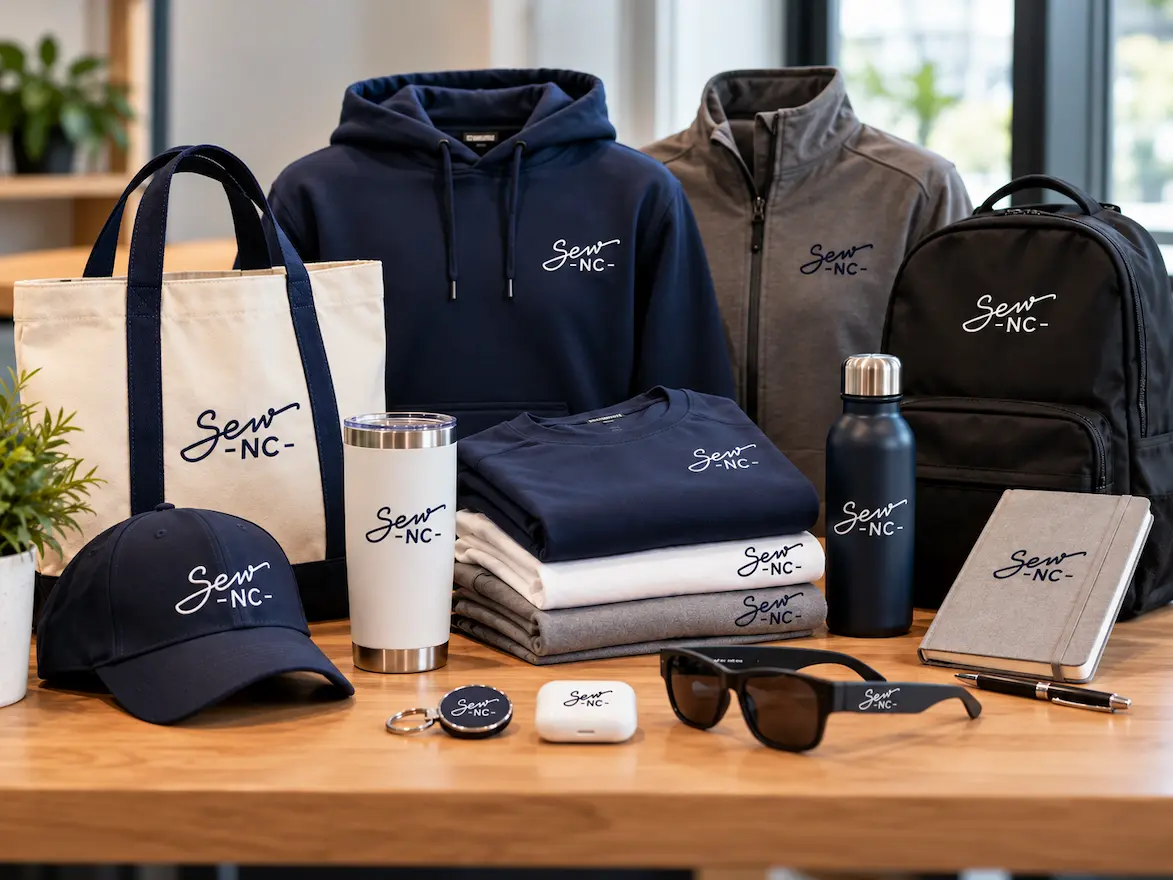
An apparel anchor generates community and casual impressions. A drinkware piece covers professional-setting visibility throughout the workday. A bag or headwear item covers the public mobility context where neither apparel nor drinkware is always in view. Each piece fills a gap the others leave open, and the cumulative impression volume across all three consistently exceeds what any single item produces regardless of its quality tier.
At Sew NC, the conversation about corporate swag ideas starts with who is receiving the items, what their daily context looks like, and what the program needs to accomplish before it gets anywhere near a product listing. Our promotional products services cover apparel, headwear, drinkware, bags, and branded merchandise for swag programs, event merchandise, recognition initiatives, and client gifting campaigns across the region.
Decoration Method as a Quality Signal
The logo application on a piece of corporate swag is not a finishing step. It operates independently of the base item as a signal about the organization’s standards. A clean embroidered chest mark on a quality hoodie communicates one thing. A cracked screen print after two washes communicates something else, and it communicates it every time the garment is worn in public.
Embroidery is the right method for corporate swag ideas where quality and permanence are the priority. Thread on fabric holds up through years of regular use without degrading, adds a dimensional quality that print methods cannot replicate, and conveys the kind of attention to detail that premium and recognition-tier swag is supposed to signal. Jackets, structured caps, quarter-zips, and premium hoodies belong here.
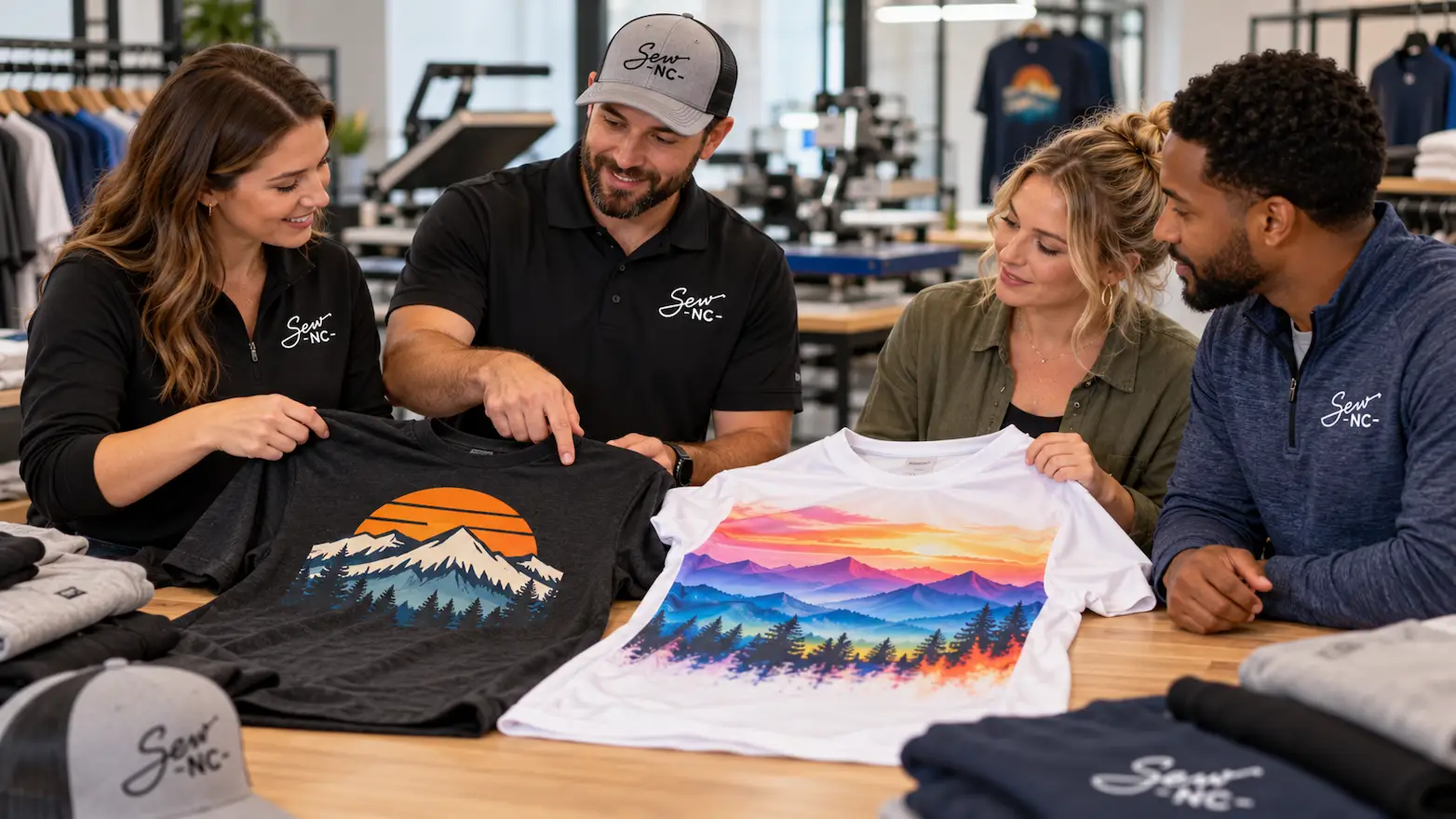
Screen printing covers high-volume programs where the quantity justifies setup and the artwork involves coverage that embroidery handles less efficiently at scale. Event t-shirts, large-format tote designs, and swag runs where the per-unit budget is constrained by distribution scale are screen printing’s natural territory. A well-executed water-based print on a quality garment produces a soft, integrated result that many recipients genuinely prefer for casual wear.
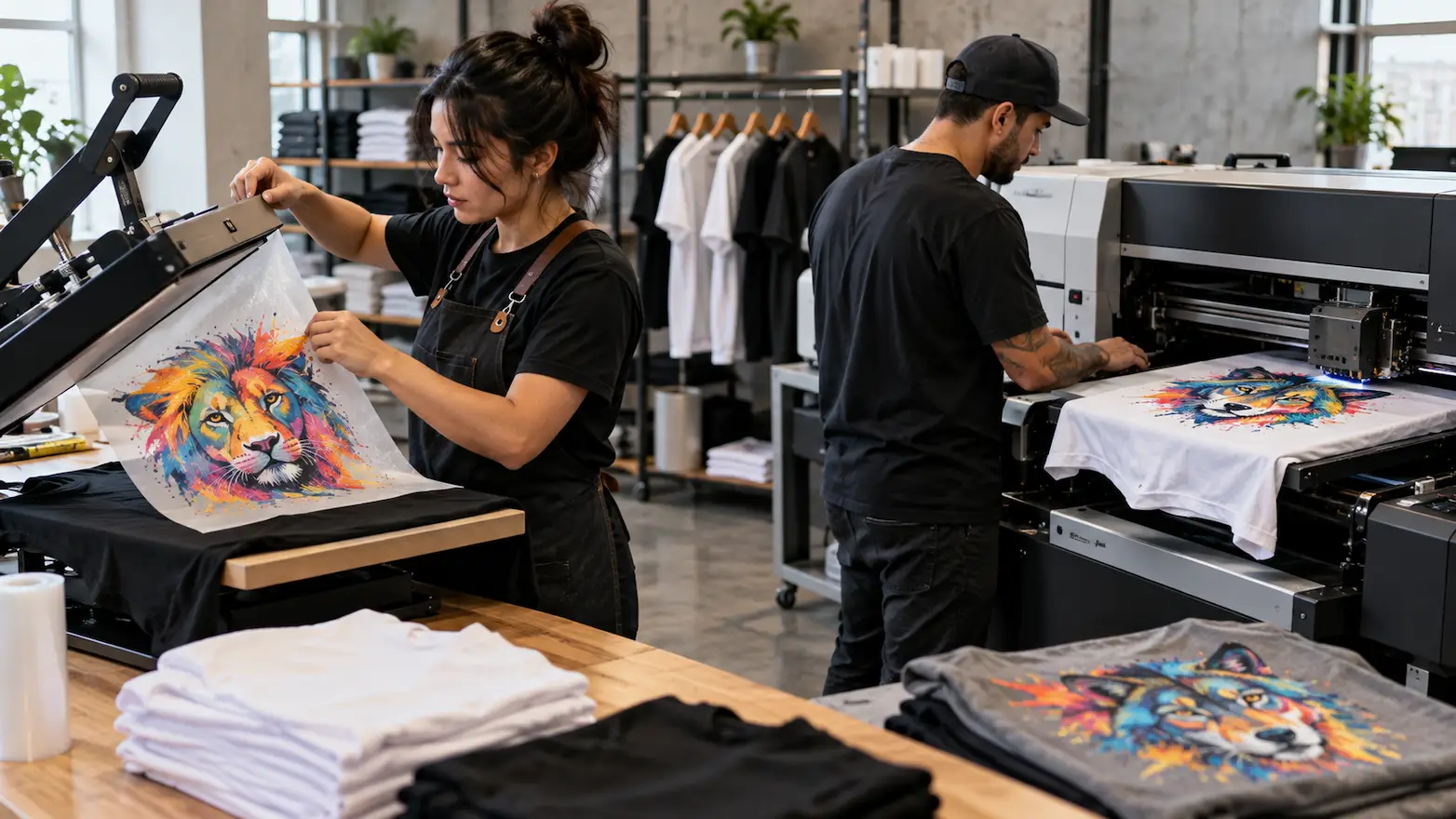
DTF handles programs that fall between those two methods. Small-run personalized swag, full-color artwork that embroidery cannot reproduce accurately, and multi-variant programs where design variations across departments or recipient groups need to run without accumulating per-variant setup costs are all DTF applications where the method’s flexibility produces a result neither of the other two can match at comparable cost.
The Planning Details That Separate Good Swag From Late Swag
Corporate swag ideas are the easy part. Execution is where programs succeed or fall apart, and the execution variables that determine whether an initiative arrives on time and at the right quality level are almost all resolved during planning rather than during production.
Artwork is the most consistent friction point. A logo that exists only as a low-resolution export from a website is not production-ready for embroidery or screen printing. Vector files in AI or EPS format give the production team the most flexibility across decoration methods. High-resolution PNG files with transparent backgrounds work for DTF. Pantone color references for brand-critical colors eliminate the guesswork that produces thread or ink shades that look close but not quite right next to the printed version of the same logo.
Timeline is the variable that catches the most corporate swag programs off guard. Standard production runs two to three weeks from artwork approval. Multi-item programs coordinating apparel, drinkware, and headwear across different production timelines need additional lead time to ensure everything arrives together rather than in pieces across separate weeks. For fall swag programs competing with year-end recognition orders, event merchandise runs, and client gifting for the same production capacity, initiating the order in August or September is not early. It is the planning standard that keeps options open.
Reach out through the Sew NC contact page to explore options for your next branded order. The corporate swag ideas that generate real return start with a planning conversation before the budget is committed to items that have not been evaluated against the recipient, the context, and the timeline the program actually requires.