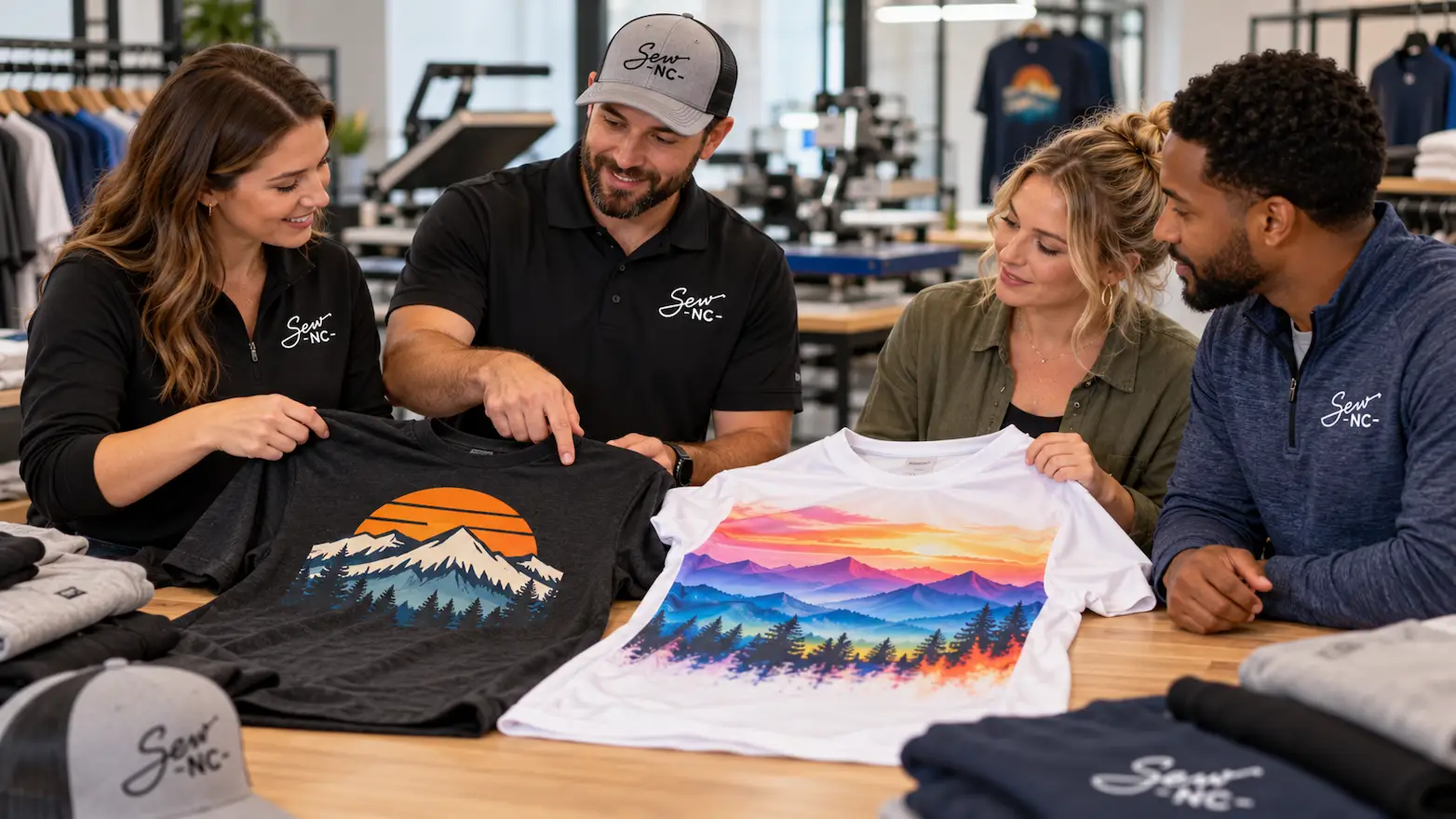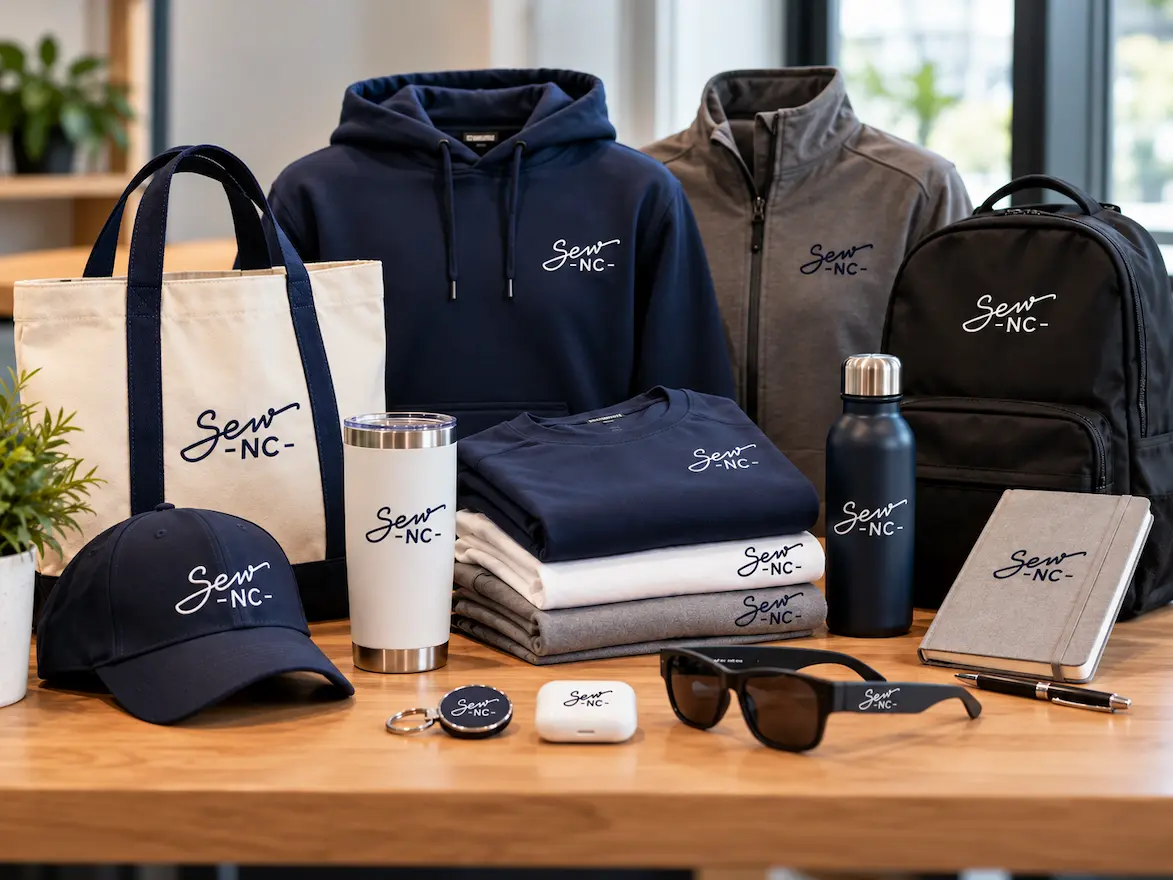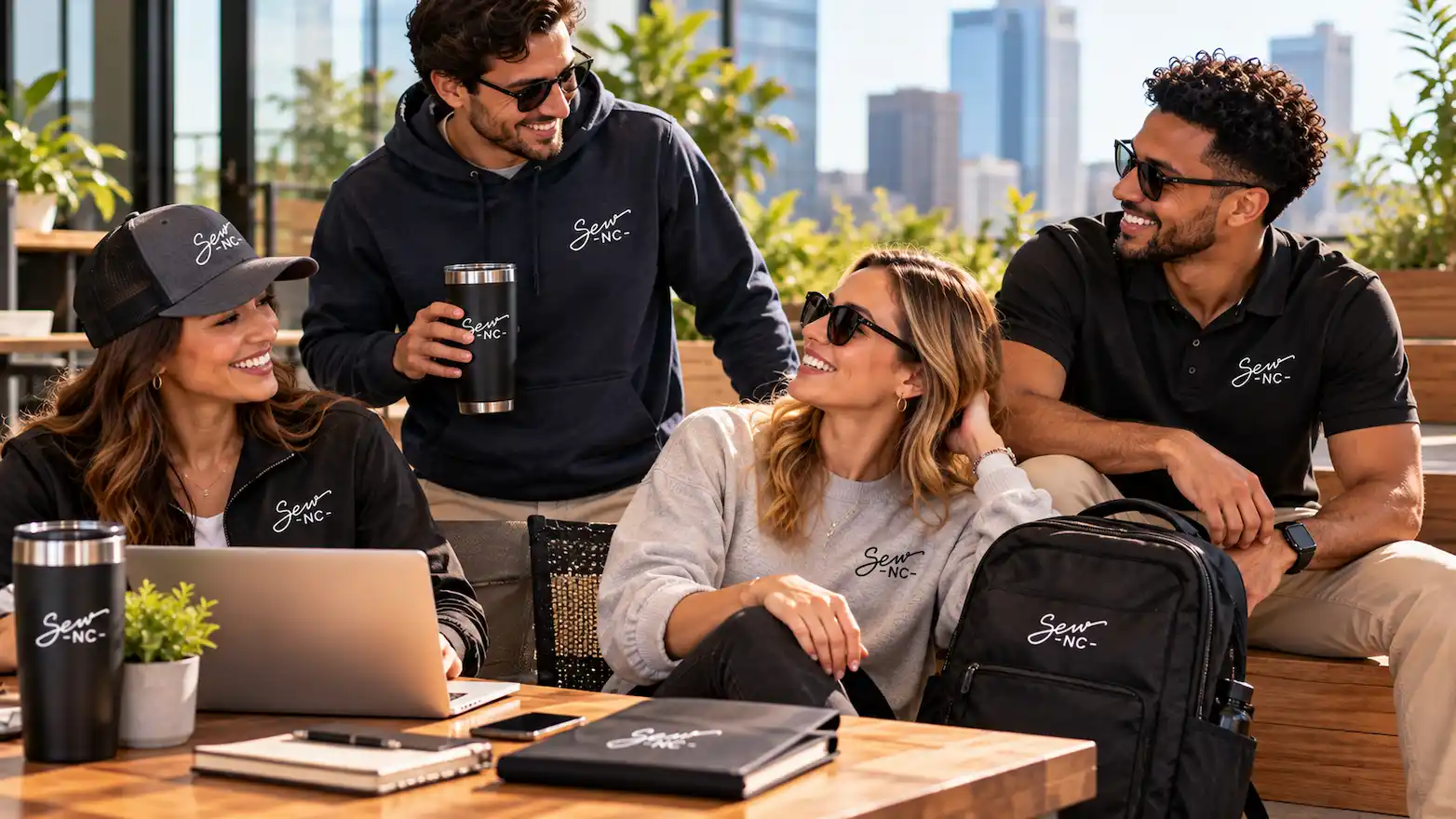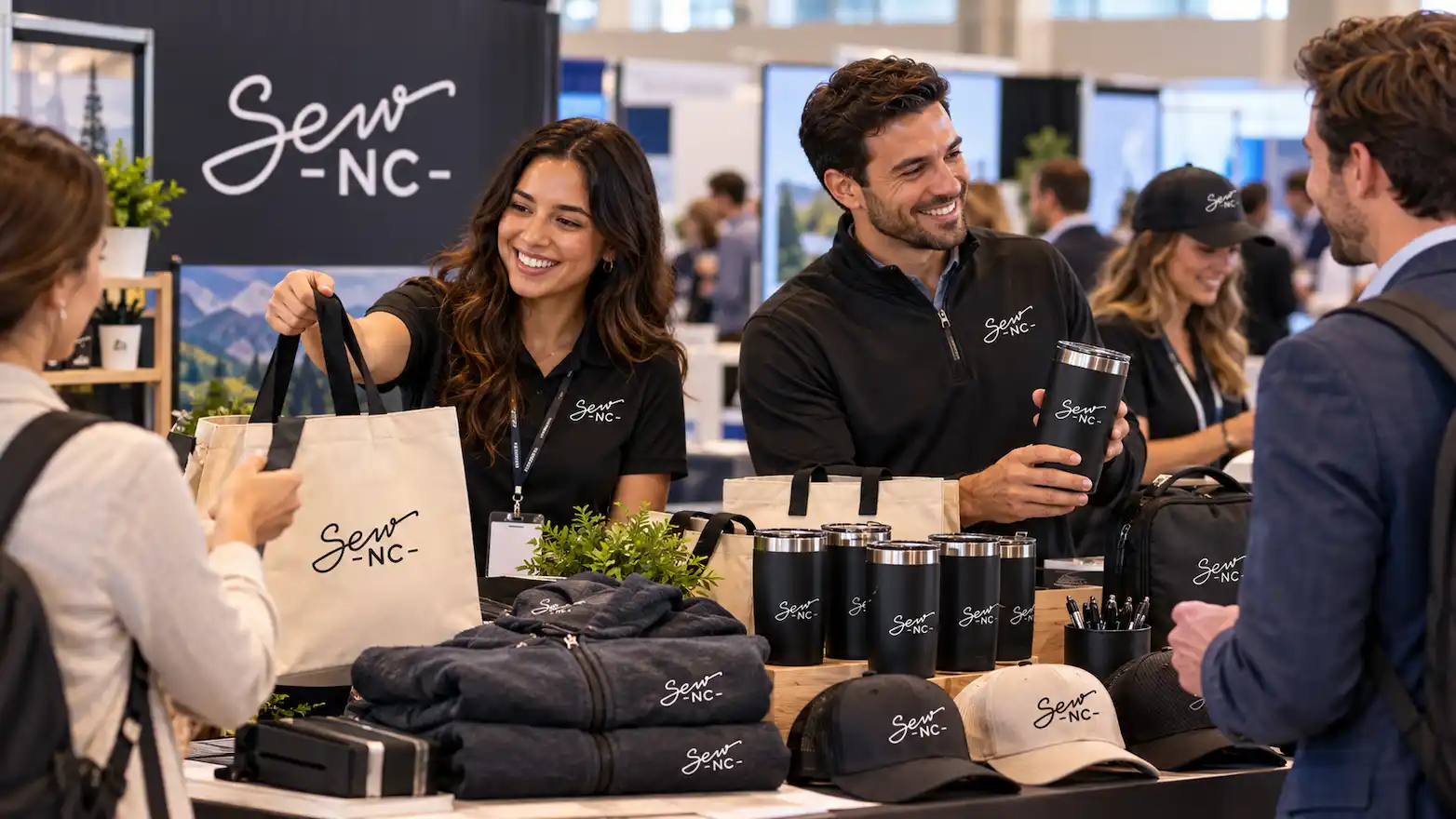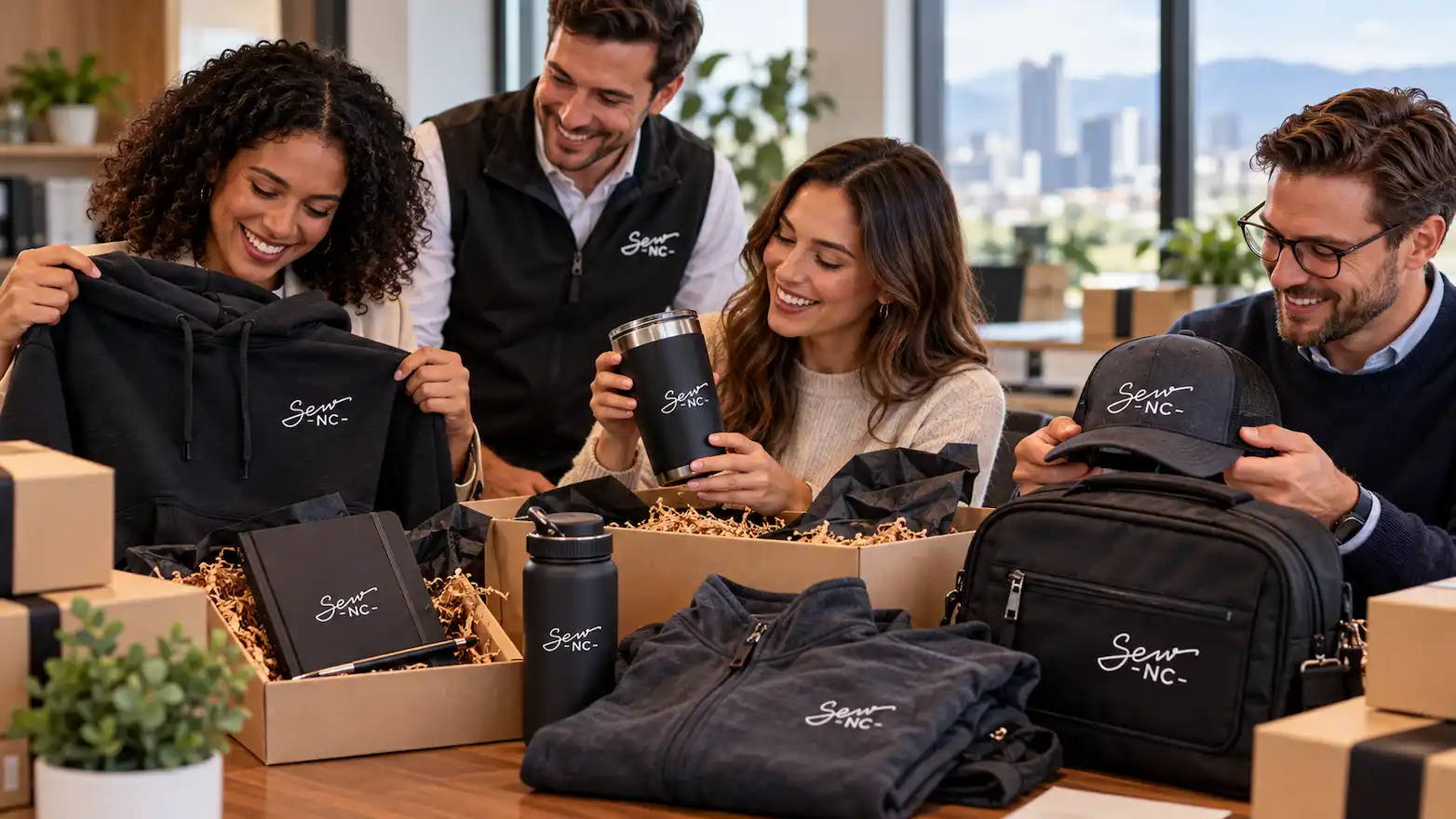
Employee engagement activities create a need for branded apparel and merchandise that normal corporate gifting programs do not. The setting is different. The recipient is not a client who needs a distance. Instead, the recipient is a team member’s daily experience inside the organization, shapes how the team member represents the organization, talks about the organization and wears the organization’s brand in public without being asked.
This difference changes what the apparel and merchandise parts of an employee engagement program must do. It also changes how the organization should think about the production decisions behind those parts.
At Sew NC employee engagement orders appear in patterns. Patterns include team retreats, recognition programs, onboarding kits, seasonal appreciation initiatives and organizational milestone celebrations. The branded elements that truly spark employee engagement are not always the elaborate ones. They are the ones that were selected with the team member’s actual daily life in mind rather than with the program budget as the primary constraint.
Why Branded Apparel Functions as an Engagement Tool
The study about how employees feel about their jobs keeps showing that feeling recognized and feeling like you belong are the two things that make the difference in how much someone cares about the company they work for. Company clothes help with both of those things.
A good company shirt given as part of a program that tries to make employees feel more connected sends a message of recognition. It’s not the same as being thanked in a meeting or getting a note on a report. It’s a thing that the employee can wear and take home with them.
Every time that person puts on the branded hoodie on a Saturday morning, or reaches for the company quarter-zip on a cold commute, the organization is present in their personal space without requiring any additional effort from the business after the initial order.
Belonging is the other variable. A team that is visually cohesive in branded gear looks and feels like a unit. That cohesion happens most clearly during employee engagement activities where the shared visual identity created by matching branded apparel does organizational work before the first scheduled activity begins.
People who look like they belong to the same group start behaving more like a group, and that effect is documented in organizational behavior research in ways that most HR planning conversations about t-shirts do not account for.
The branded apparel component of an employee engagement activities program is doing more than distributing shirts. It is building a physical manifestation of the organizational culture the engagement program is designed to reinforce.
What the Industry Data Shows About Branded Merchandise and Engagement
The Advertising Specialty Institute’s yearly studies always show that branded apparel is the merchandise category with the highest retention rate and the highest average number of impressions per item over its life. A well‑made branded garment stays in use. It keeps for a much longer time than most other branded merchandise categories.
This data is important when thinking about employee engagement activities because it indicates that the merchandise part of an engagement program lasts longer than the program itself. A team retreat that generates goodwill for three weeks is a good event.
A team retreat that results in a quality branded hoodie people wear for two years generates ongoing organizational presence in the community across a period that the event itself could never sustain.
For organizations that take employee engagement activities seriously as a culture-building investment, treating the branded apparel component as a long-duration touchpoint rather than a one-time distribution changes the production decisions that make sense.
A slightly higher per-unit investment in garment quality produces a product with a longer service life, which produces more impressions, which produces more return on the engagement program investment measured in how often the brand appears in the community represented by the team member’s daily life.
The quality threshold that matters is not absolute. It is relative to what the team members would choose for themselves. A branded item that clears the bar the recipient sets for their personal wardrobe gets worn voluntarily. One that does not get donated or forgotten, regardless of how much the program invested in the event itself.
Employee Engagement Activities and Apparel by Program Type
Different types of employee engagement activities create needs for clothes and products. When all of them are seen as the same the branded items often do not match the event they are supposed to support.
Team retreats and events need branded clothing that helps people look the same during the event and helps them remember the experience after. A good hoodie or a made shirt in the company’s main color does both. It works as clothing during the retreat. Becomes something people wear after to remember the time they spent together.
Programs that recognize achievements or special events need a quality more than regular event clothing. A gift for a five-year anniversary, a reward for a sales goal or a sign of a promotion that comes as a branded piece of clothing shows how the company values the person.
Onboarding programs are where branded apparel does some of its most durable engagement work. The first impression a new team member forms about the organization is shaped by the materials they receive at the start.
An onboarding kit that includes a quality branded hoodie, a clean embroidered hat, and a practical branded bag communicates an organizational culture that invests in its people. That impression, formed on day one, affects how the new team member represents the brand to their personal and professional network from that point forward.
A team visibly working in matching branded gear in the community communicates organizational commitment to the people who observe the event. It also generates impressions among community members who are potential customers, potential employees, and potential partners of the business, which makes the apparel component of an employee engagement activities a marketing function as much as an organizational one.
Corporate Uniforms and Work Shirts as Engagement Vehicles
There is a connection aspect to company clothes and work shirts that many companies do not really think about when they plan how to keep employees involved. This is seen in the choices made when uniform programs are only seen as money spent or as everyday moments where the people wearing them feel connected.
A team member who puts on the company shirt every day has a different feeling about that shirt compared to how they feel about a hoodie they wear once a year, for an event. The everyday uniform is how they appear at work. It is the garment their colleagues and clients see them in. It is the branded item they wear in their car, at the job site, in the client’s home, and at the coffee shop before the shift starts.
I have seen that when the daily uniform is a garment that fits well, stays strong after regular washing and has a neat embroidered logo that still looks purposeful after a hundred washes the daily uniform shows that the organization thinks the team member’s daily experience is worth investing in.
When the daily uniform is thin, poorly finished degrades quickly and fits unevenly the daily uniform says something entirely and team members notice that difference even if they do not speak about it.
For organizations that treat employee engagement activities as a culture-building plan, the daily uniform is the touchpoint that happens most often in the whole branded apparel program. An engagement initiative that invests in premium event merchandise but neglects the quality of the daily work shirt is optimizing for the wrong moment.
At Sew NC, we work with businesses on corporate uniforms, work shirts, and engagement program apparel that accounts for both the functional requirements of the garment and the organizational signals that quality and decoration communicate to the people wearing them. Our corporate apparel services cover embroidered and printed apparel, headwear, and branded merchandise for recognition programs, onboarding kits, event merchandise, and daily staff uniform programs across the region.
Decoration Method and What It Signals About the Organization
The decoration applied to employee engagement activities communicates something about the organization’s standards independently of the garment quality. A clean, durably embroidered logo on a quality piece signals that the details mattered to whoever assembled the program.
An applied print that starts cracking after just two washes shows the item was made at the lowest possible cost. That’s not the message an engagement program wants to send. It sends a signal of quality, lack of care and short-term thinking. No one wants their employees or partners to feel like they’re getting a product.
That’s why embroidery is the go-to choice for engagement apparel when the goal is to communicate quality and long-term value.
Embroidery uses thread on fabric, which can handle years of washing without fading or cracking. It adds a raised look that flat prints can’t match. It also shows attention to detail, something that’s expected when you’re giving recognition-tier items. For awards, milestones, onboarding kits or premium gifts embroidery fits the moment. It feels special, durable and thoughtful.
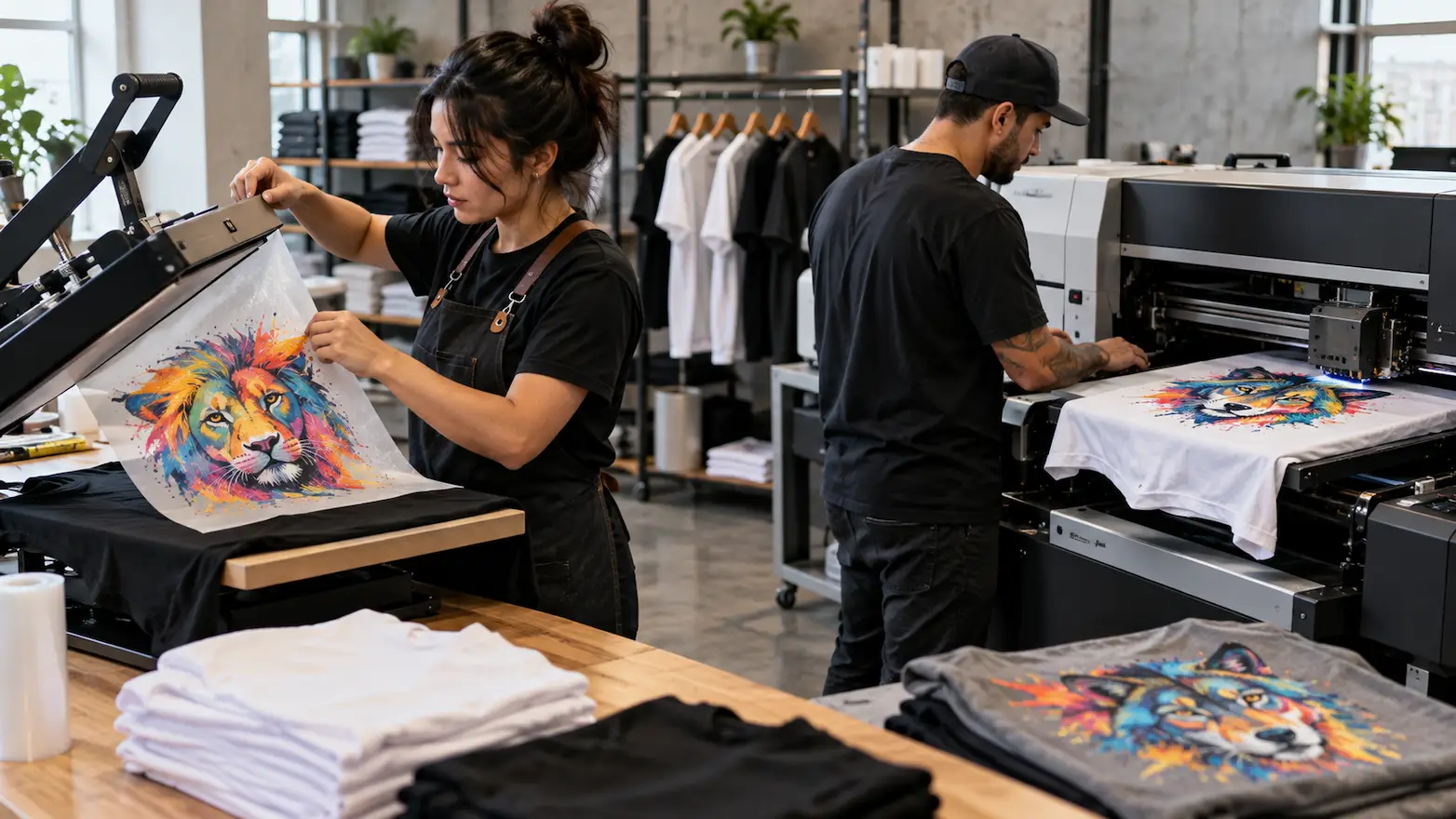
Screen printing works well in situations. It’s best when you’re dealing with high-volume event items where the quantity makes the setup cost worth it. If the design is bold, full-front or complex screen printing handles it better than embroidery.
DTF handles the personalized and segmented engagement programs that require design variations across departments, tenure levels, or team divisions without the per-variant setup overhead that makes screen printing less practical at small-batch quantities.
Recognition programs that include individual names, a different design element for each tenure milestone, or department-specific branding alongside a shared organizational logo are natural DTF applications in an engagement context.
Planning the Branded Apparel Component of Engagement Programs
The production timeline for employee engagement apparel is the planning variable that most consistently produces problems when it is not accounted for from the beginning of the program planning process.
Standard decorated apparel production runs two to three weeks from artwork approval under normal conditions. Employee engagement activities that involve a physical event, a retreat date, or a distribution moment tied to a specific organizational calendar event have a fixed deadline that the production timeline needs to fit within, not around. Apparel for a team retreat that arrives two days after the retreat has served no purpose.
For year-end recognition programs and holiday appreciation initiatives, which concentrate demand in the October through December window, initiating the order in September is the planning standard that preserves garment options, avoids production queue pressure, and provides a timeline buffer for the proof revision round that most orders require at least once.
Initiating in November for a December distribution is the planning condition that produces the most compromised outcomes: rushed decoration, limited garment availability, and no buffer for corrections.
Size planning for engagement program apparel requires more process than most buyers account for at the planning stage. An appreciation gift that arrives in the wrong size communicates, whatever the organizational intent behind the program, that the individual receiving it was not specifically accounted for.
Collecting confirmed size information from participants before the order is placed adds time to the front end of the process and removes the misfit problem that undermines the recognition moment the program was designed to create.
Building a Repeatable Engagement Apparel System
Organizations that run employee engagement activities on a recurring annual basis benefit most when the branded apparel component is treated as a system rather than a series of independent purchasing decisions that reset every cycle.
A consistent quality tier for each program type, a consistent decoration standard across annual events, and a stable garment selection that does not require full re-selection every time produces a program that team members recognize and associate with the organization’s culture rather than an annual purchasing task that looks different every year.
Archiving artwork files, garment specifications, and decoration settings from the initial program run makes each subsequent order faster, more accurate, and visually consistent with what came before. The fifth-year anniversary gift should look like it belongs to the same program as the first-year gift.
The annual retreat hoodie should build a visual continuity across years that participants notice over time. That continuity is part of what turns a merchandise program into a recognizable organizational tradition rather than a recurring line item in the HR budget.
Reach out through the Sew NC contact page to get started with a custom quote for your next employee engagement program. The selection and production conversation is where the branded element of the program is either set up to do its job or set up to miss, and it is worth having before the planning window closes.